
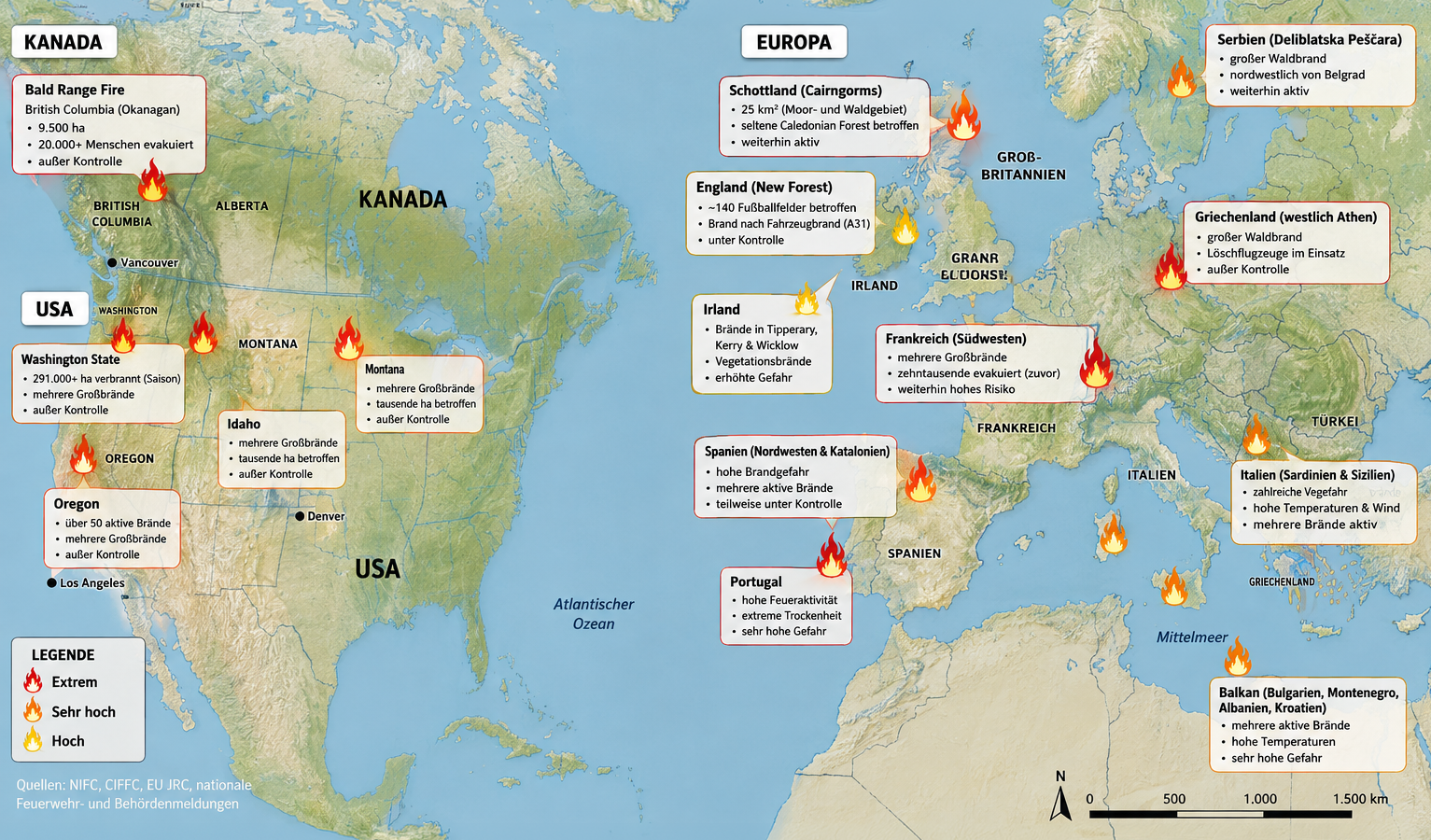
Fires in Europe, the USA and Canada
The current situation on Tuesday, 11 August 2026 – The wildfire situation is simultaneously worsening in several regions of the northern hemisphere. Canada, the western United States and southern Europe are currently particularly affected. However, Great Britain and Scotland are also experiencing an unusually high level of fire activity. A distinctive feature of this fire season is its extraordinary geographical extent: whilst vast areas of woodland are burning in Canada and the US, France, Spain, Portugal, Greece and Italy are simultaneously battling a persistent wave of fires. In Great Britain, too, the risk is rising due to drought and a new heatwave.
Canada: A dramatic situation in British Columbia
The Okanagan has been particularly hard hit
One of the most critical wildfires at present is in British Columbia in western Canada. The Bald Range Fire near Summerland in the Okanagan has spread rapidly. Around 9,500 hectares have already been burnt. More than 20,000 people have had to leave their homes, and thousands more are under evacuation alerts. The communities of Summerland and Peachland have been particularly hard hit. In light of these dramatic developments, British Columbia has declared a state of emergency. The Canadian military has also been mobilised to provide support. The situation is being exacerbated by high temperatures, dry conditions and strong winds. Canada has already lost around 3.9 million hectares to wildfires this year. Numerous large-scale fires are also active in other parts of the country.
USA: Extreme wildfire activity in the West
The United States is also experiencing an exceptionally intense wildfire season. According to the National Interagency Fire Centre, 101 new fires were recorded within a 24-hour period alone. These included nine new major fires. A total of 98 major fires remained out of control. Around 29,840 emergency personnel were deployed. The US remains at the highest national fire preparedness level, Preparedness Level 5.
Washington State particularly affected
The situation is particularly dire in the State of Washington. More than 720,000 acres – around 291,000 hectares – have already been burnt there. This makes the current fire season one of the worst in the past two decades. Several major fires have each covered an area of more than 100,000 acres.
Oregon, Idaho and Montana
Oregon, Idaho and Montana are also battling numerous active wildfires. The fires in the north-west of the US are simultaneously causing significant smoke pollution. Plumes of smoke are spreading across large parts of the country and affecting air quality in many places.
In the US, by August 2026, the figure was already 2.272 million acres above the 10-year average. Compared with 2025 – which was already a particularly severe year – the area burnt is already around 75 per cent higher. This is a clear indication that the current US fire season is not only producing more fires, but, above all, is resulting in a significantly larger area being lost per fire.
Europe: Record-breaking wildfire season
Europe, too, is experiencing an exceptional wildfire season. According to the latest data from the European Commission, more than 529,000 hectares had already been burnt within the EU by 9 August 2026. This means that Europe has already exceeded both the previous record set in 2025 and the long-term average for the last ten years – 168 per cent above the long-term EFFIS average. In total, more than 1,500 major fires have been recorded since the start of the year. The largest active fires continue to be in the Mediterranean region and the Balkans.
Greece: New fires despite a difficult starting point
Forest fire west of Athens
Greece remains one of the countries with the highest risk of wildfires. On Monday 10 August, another major wildfire was reported west of Athens. Fire-fighting aircraft and helicopters were deployed. The country had already been battling several severe wildfires. The extreme heat, parched vegetation and strong winds mean that the risk of the fire spreading rapidly remains very high.
France: The wave of fires is not yet over
France remains one of the hardest-hit countries in Europe. The south-west and south of the country, in particular, have been affected by severe forest fires. Major fires have led to large-scale evacuations in recent weeks. At the same time, the next heatwave is ensuring that the situation remains tense. The dry vegetation provides the flames with large quantities of fuel.
Spain: High risk of wildfires across the country
Spain also remains a key hotspot in the European wildfire situation. Dry regions in the north-west, north-east and parts of Catalonia are particularly at risk. Many of the major fires of recent weeks are now under control, though they have not yet been completely extinguished. The combination of extreme heat, drought and dry vegetation continues to keep the risk of fire at a very high level.
Portugal: Extreme drought
Portugal is also one of the European countries with a particularly high level of fire activity. Portugal and Spain are among the countries where the number of forest fires has risen particularly sharply compared with the previous year.
Italy: Fires in Sardinia and Sicily
Italy, too, continues to be affected by numerous grass and forest fires.
The following are particularly at risk:
- Sardinia
- Sicily
- Southern Italy
- Parts of central Italy
The summer drought and high temperatures continue to pose a high risk of forest fires.
The Balkans: High risk of fire
The situation in the Balkans also remains tense.
Serbia
In Serbia, emergency services are continuing to battle major fires, including one in Deliblatska Peščara, north-west of Belgrade. Bulgaria, Montenegro, Albania and Croatia also remain on high alert.
United Kingdom: Risk of forest fires on the rise
The UK is increasingly becoming another European hotspot. By 10 August, around 23,359 hectares had already been burnt in the UK. A total of 72 fires covering an area of more than 30 hectares were recorded.
England: Drought and a new heatwave
The situation in England is particularly striking. Almost three-quarters of England is now officially experiencing drought conditions. At the same time, temperatures of up to 36 °C are forecast for this week.
New Forest: Fire following a vehicle blaze
A new wildfire broke out in the New Forest in Hampshire on Monday 10 August. The fire is believed to have started following a vehicle fire on the A31 and subsequently spread to the dry heathland.
Scotland: Major fire in the Cairngorms
Scotland, too, continues to grapple with the aftermath of an exceptionally large forest fire. The Cairngorms forest fire has now engulfed around 25 square kilometres of moorland and woodland. That is equivalent to an area of around 3,500 football pitches. The rare Caledonian Forest is particularly valuable and at risk. The Scottish Fire Service is continuing to monitor the area, using thermal imaging drones, amongst other methods, to detect any remaining pockets of embers.
Ireland: Drought increases the risk
Ireland has been significantly less affected by the current spate of fires than southern Europe or Canada. In recent weeks, fires have been reported in Tipperary, Kerry and Wicklow, amongst other places.
An overview of the main fire-prone regions
| Region | Current situation |
|---|---|
| 🇨🇦 Canada | 🔴 Extreme |
| 🇺🇸 Western USA | 🔴 Extreme |
| 🇫🇷 France | 🔴 Very high |
| 🇪🇸 Spain | 🔴 Very high |
| 🇬🇷 Greece | 🔴 Very high |
| 🇵🇹 Portugal | 🔴 Very high |
| 🇮🇹 Italy | 🟠 High |
| 🇷🇸 The Balkans | 🟠 High |
| 🇬🇧 England | 🟠 High and rising |
| 🏴 Scotland | 🟠 High, locally extreme |
| 🇮🇪 Ireland | 🟡 Increased |
The big picture
The current fire situation is showing an unusual pattern. Whilst British Columbia, Washington and Oregon in western North America are battling massive forest fires, the wave of fires continues in France, Spain, Portugal, Greece and Italy. At the same time, the risk of fire is rising significantly in Great Britain and Scotland.
Particularly striking is the combination of persistent drought, high temperatures, parched vegetation and increasing heatwaves. The fires are therefore not merely a regional problem. Rather, they reflect an exceptionally widespread forest fire situation that currently extends across large parts of the USA, Canada and Europe.
Date of summary: 11 August 2026.

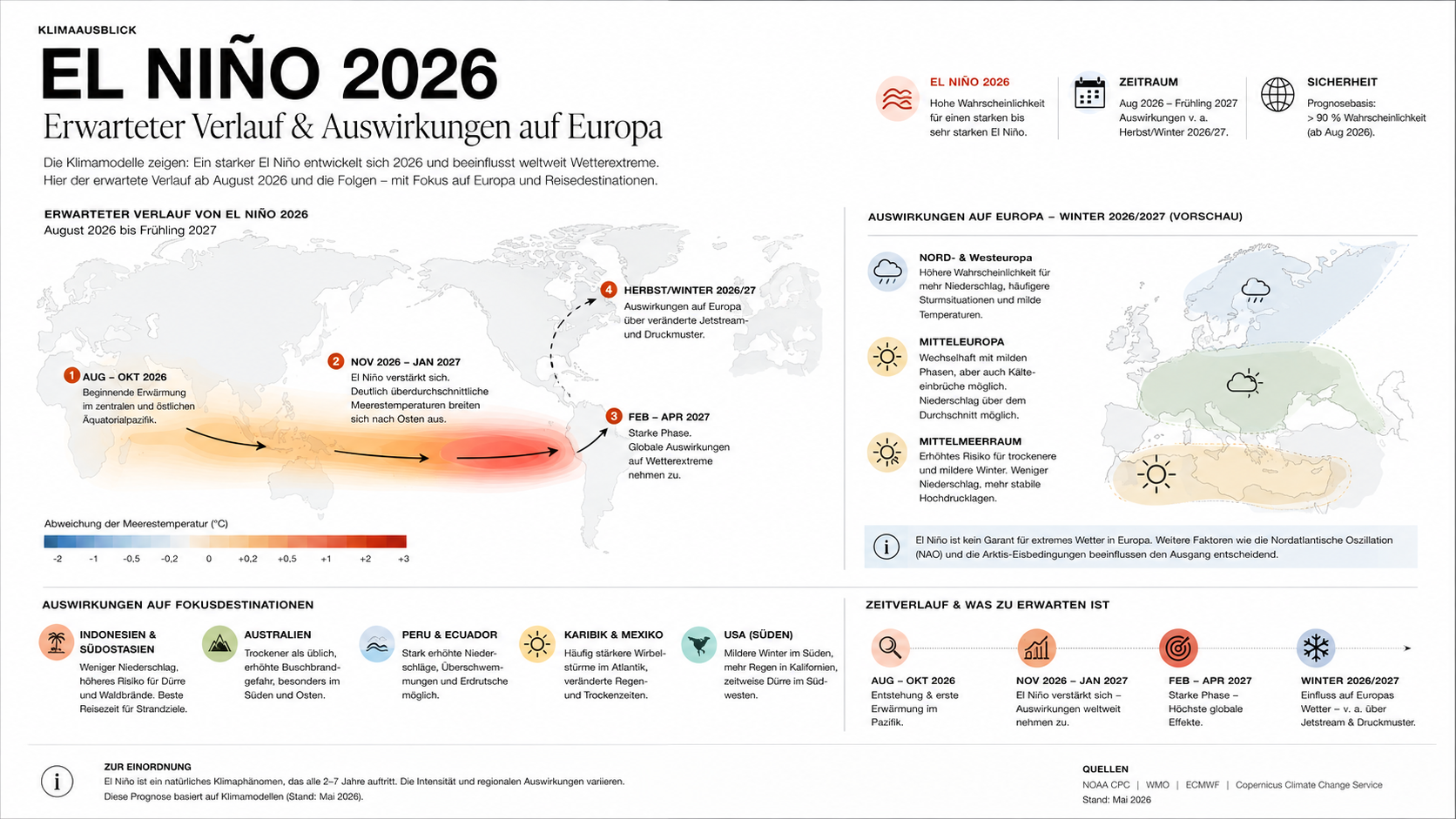
El Niño 2026: What to expect
It begins far away from Europe, where the Pacific Ocean is at its widest. Off the coast of South America, the sea becomes unusually warm, and vast air masses alter their circulation – a weather phenomenon that originated thousands of kilometres away is also affecting travel plans in Europe.
El Niño 2026 is no longer just a model prediction. According to the US National Oceanic and Atmospheric Administration (NOAA), the phenomenon is already well established and is intensifying. The probability of a very strong El Niño occurring in the autumn and winter of 2026/27 stands at around 90 per cent. NOAA even considers a historic course of events to be possible: for October to December, it states there is a 69 per cent probability that the intensity will exceed that of previous events since comparable records began.
However, this does not mean that a specific weather pattern can be predicted for every destination. El Niño shifts the probabilities, not the weather calendar. In Europe in particular, the correlations are significantly weaker than, for example, in the tropical Pacific. The ECMWF points out that El Niño effects in Europe vary from season to season and can sometimes even cancel each other out over the course of a whole winter.
The Pacific sets the pace
The signal is likely to be particularly pronounced in the traditional El Niño regions. Peru and Ecuador are among the countries that are particularly closely linked to the tropical Pacific. Significant changes in rainfall patterns can lead to flooding and landslides in these areas, whilst other regions suffer from drought at the same time.
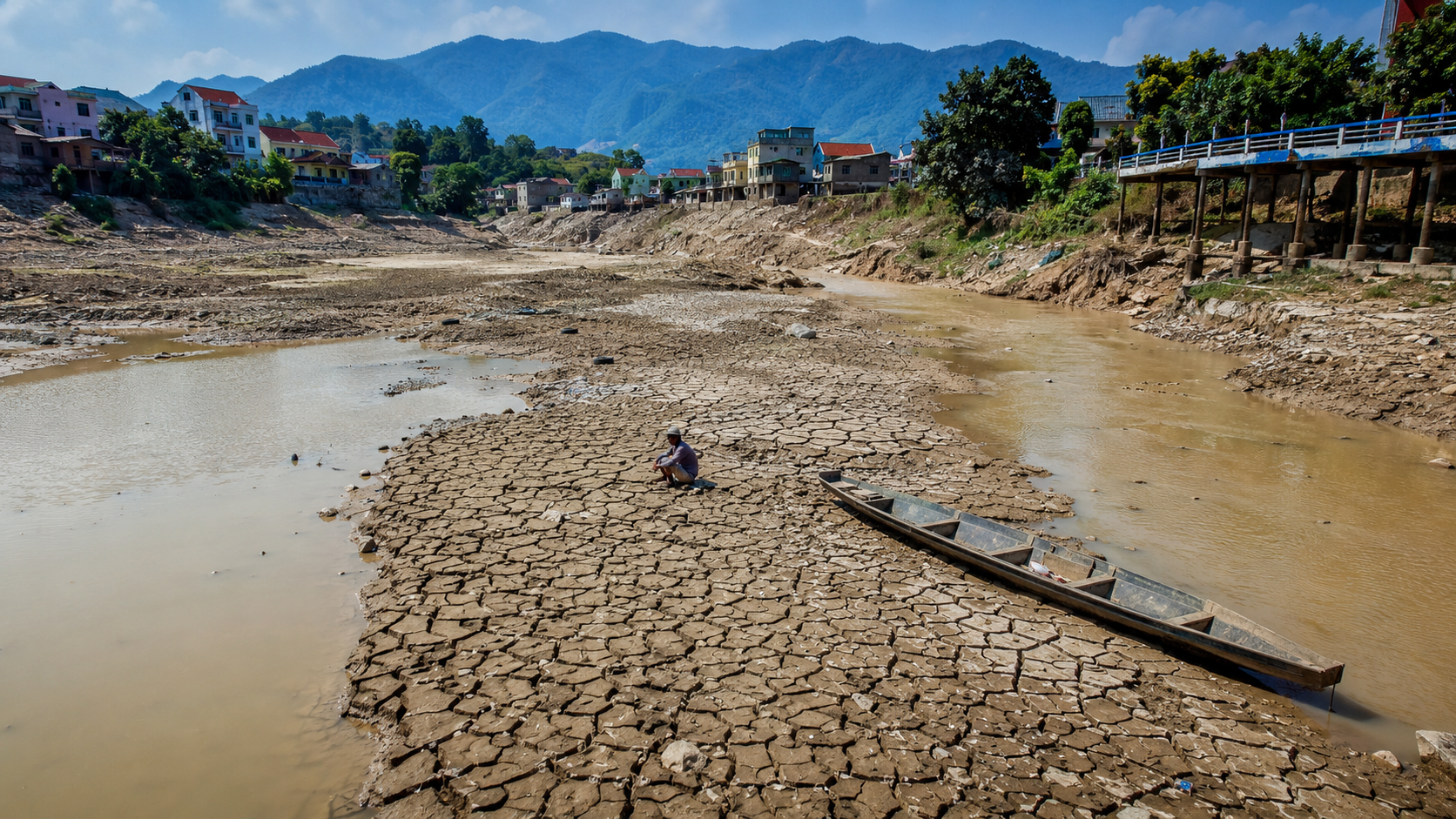
The situation is different in Indonesia and parts of South-East Asia. In those areas, El Niño often brings less rainfall. For travellers, this sounds like perfect beach weather. For the regions affected, however, the drought can have significant consequences – for water supplies, agriculture and the risk of forest fires. The WMO expects a classic El Niño pattern overall for 2026: more rainfall in some regions, and a risk of drought in others.
Australia, too, has traditionally been affected. Drier conditions can increase the risk of fire. In parts of North America, meanwhile, rainfall and temperature patterns are changing; the effects extend from California to the southern United States.
And Mallorca?
For the Balearic Islands, the situation is complicated – and that is precisely what makes it interesting. Mallorca lies well outside the actual El Niño zone. A strong El Niño therefore does not automatically mean a dry or particularly warm winter in Mallorca. The effect is mediated through a chain of atmospheric interactions, in which, amongst other factors, the jet stream and the North Atlantic circulation play a role.
For travellers, this means that El Niño is more of a background factor for Mallorca than a specific weather forecast. In the Mediterranean region, rainfall patterns, temperatures and storm activity may change, but other factors – such as the North Atlantic Oscillation – are often more significant for the weather in Europe.
Europe’s winter under scrutiny
Things are set to get interesting here from autumn onwards. The WMO forecasts above-average temperatures worldwide and significant changes in precipitation patterns. No single scenario can be predicted for Europe as a whole. Atmospheric patterns are likely to shift: Northern Europe may be more heavily affected by precipitation and spells of storms, whilst dry spells may become more likely in the Mediterranean region.
For travellers, this is precisely the most important message: 2026/27 will not be a year when you can simply consult a twelve-month weather map. You should keep an eye on regional forecasts and short-term weather data.
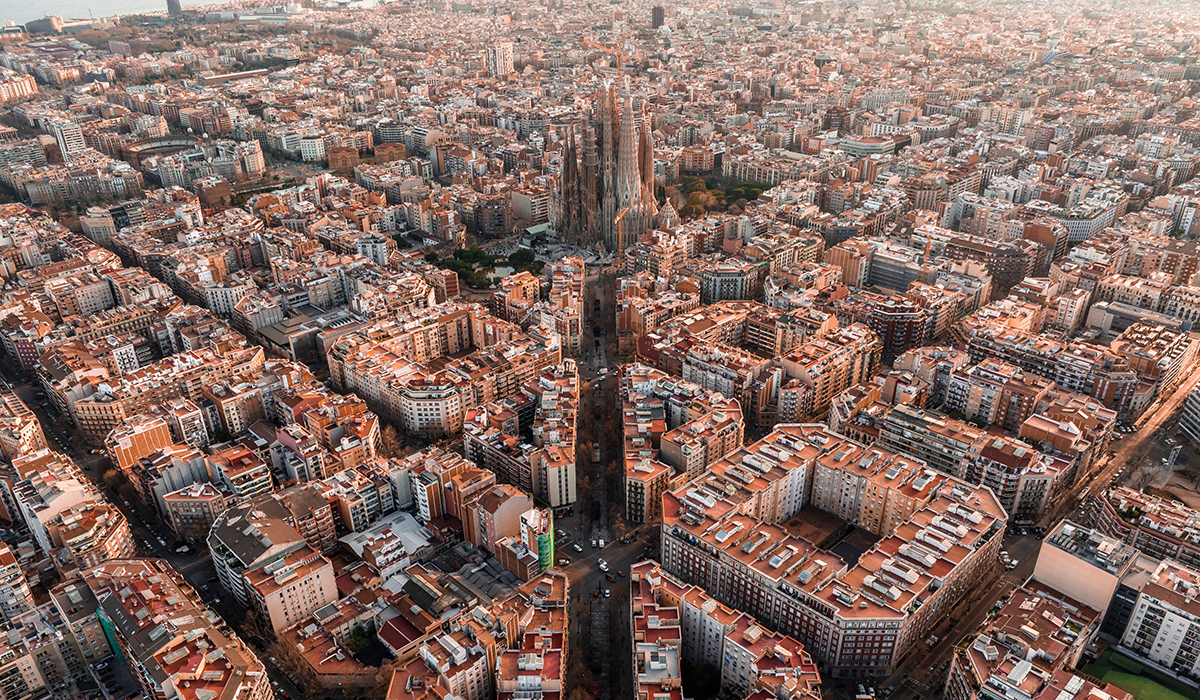
“Not a single more tourist” – Barcelona is scaling back
José Antonio Donaire, Barcelona’s new commissioner for sustainable tourism, is presenting measures to limit visitor numbers. The Catalan metropolis—long known as a prime example of mass tourism spiraling out of control—is capitulating to its own success.
With a population of just 1.6 million, the city resembles an overheated theme park in summer, with ten times that number of visitors flooding in each year. The consequences of this overwhelming influx threaten the very livelihoods of locals. Skyrocketing rents make housing unaffordable. Overcrowded subways disrupt daily life. Traditional neighborhoods are losing their identity.
Now, the city administration is pulling the emergency brake. The annual number of visitors is being capped at exactly 15.7 million—the same level as the previous year. It is an unprecedented attempt to prioritize quality of life over profit. Cruise ship tourists are hit particularly hard by this shift in policy; the city administration has long viewed them as the embodiment of the problem—they flood the narrow streets and clog the Ramblas for a few hours, yet leave hardly any money behind in local shops.
The city is taking tough administrative action against these "day-trippers passing through":
• The number of cruise ship terminals is being reduced from seven to five.
• The maximum daily passenger capacity decreases from 37,000 to 31,000.
• Significantly higher fees are intended to deter shipping companies and budget tourists.
Behind these measures lies a plan for a profound transformation. Until now, two-thirds of the clientele consisted of leisure travelers. The goal for the future is a strict three-way split: one-third business travelers, one-third cultural tourists, and one-third leisure travelers. The aim is to attract affluent guests who stay, rather than budget travelers who merely consume.
At the same time, the city is drying up the market for illegal and short-term rentals. Following the suspension of new license issuance, around 10,000 vacation rentals are set to disappear from the market entirely by 2028 and revert to regular housing. With a tourist tax now ranging from ten to 15 euros per person per night, Barcelona has reached a peak level. The Catalan metropolis’s message is unmistakable: Barcelona is not a theme park, but a city where people still want to live. All of Europe will be watching closely to see if this experiment succeeds without turning off the economic tap.

The Hidden Trap in a Five-Star Hotel
Hackers are compromising routers at international hotels and conference centers. Anyone who unsuspectingly connects to the Wi-Fi while on a business trip risks—in the worst-case scenario—losing control of the entire corporate network, often without even realizing it.
It is a classic scene from a modern business trip: after checking into a business hotel in Manhattan or on Berlin’s Friedrichstraße, there is hardly any time to unpack. A meeting with an international client awaits, and the laptop is flipped open. A click on the hotel’s Wi-Fi, the entry of a room number and surname on the welcome page, and the connection to the digital working world is established. It is a familiar, almost mechanical routine. Yet, in that very moment of inattention—caught between jet lag and the pressure of a tight schedule—the trap snaps shut.
Security researchers worldwide are currently sounding the alarm over a sophisticated cyber-espionage campaign known as "CaptiveCrunch." What makes it particularly insidious is that the attackers—suspected by intelligence agencies to be linked to a Russian actor—do not hack travelers' laptops; instead, they hijack the hotels' own digital infrastructure.
If the router redirects
Typically, a hotel’s Wi-Fi gateway acts like a digital mail carrier. It takes the address a guest types into their browser—such as the URL for Microsoft 365 or a corporate intranet—and forwards it to the correct server. However, in the case of the affected hotels, attackers gained administrative access to these routers. They manipulated the Domain Name System (DNS)—essentially the internet’s phonebook.
If a guest now enters the legitimate address of their cloud service, the hotel Wi-Fi responds with a lie. It silently redirects the browser to a deceptively authentic copy of the login page, which is hosted on the hackers' servers. Addresses like m365-owa.com imitate the original so perfectly that they are barely distinguishable when walking past.
To the victims, everything looks normal. The internet is working, the hotel logo lights up, and the login screen exactly matches the familiar corporate environment. Yet anyone who enters their login credentials here is handing them straight over to criminals.
The undermined security promise
It is particularly concerning how attackers circumvent supposedly secure two-factor authentication (MFA). Many companies lull themselves into a false sense of security because a password alone is often no longer sufficient to gain access to sensitive systems. To achieve this, the cybercrime architects employ a psychological ploy: they display a prompt for so-called "device code authentication" on the fake webpage. The stressed traveler is shown a code that they are asked to confirm on their smartphone. What the victim does not realize is that, at that very moment, the hackers are initiating a genuine login attempt with Microsoft in the background.
If the user enters the code on their mobile phone, they are not authorizing their own laptop, but rather the attackers' server. The hackers obtain a permanent digital pass (OAuth token) for the entire corporate network—without ever knowing the password. The consequences for affected companies are devastating. Once inside the system, attackers can steal sensitive patents, divert financial transactions, or undetected monitor the internal communications of DAX-listed corporations and law firms.
Conventional defense fails
The biggest problem for IT departments is the inability of end devices to defend against this type of attack. Because the manipulation occurs at the network level, standard protective measures often prove ineffective. Even users who have configured a secure public DNS service—such as Google’s—on their laptops remain unprotected; the compromised hotel Wi-Fi intercepts the unencrypted request and falsifies the response before it even leaves the hotel.
Moreover, the attack is by no means limited to the theft of passwords. In many cases, the perpetrators attempt to overwrite proxy configurations on Windows systems or—under the guise of urgent browser updates—trick users into installing sophisticated malware that extracts passwords directly from system memory.
The End of Digital Naivety
For business travelers, this new wave of attacks spells the temporary end of convenience. Cybersecurity authorities strongly advise treating hotel Wi-Fi networks like hostile territory during business trips.
The surest form of protection right now is simply to avoid these networks: anyone handling sensitive data should steer clear of hotel, airport, and conference center networks entirely and instead use their smartphone’s mobile network (LTE or 5G) as a hotspot. If using Wi-Fi is unavoidable, a "full-tunnel VPN" is essential; this ensures that all data traffic—including DNS requests—is fully encrypted from the very first moment and routed past the compromised hotel router.
Above all, however, the threat calls for a new culture of digital mistrust. If the routine login process in a hotel room deviates—even slightly—from the usual procedure at the office, the rule is now: close the laptop immediately. The client meeting will simply have to wait a few minutes.
How to protect yourself while traveling
- Benefits of mobile hotspots: Whenever possible, use the smartphone's mobile network (LTE/5G) instead of the hotel Wi-Fi.
- Always work with a VPN: Use a permanently active Full-tunnel VPN, which encrypts all data traffic (including DNS).
- Caution with device codes: Never confirm unexpected prompts for device pairing or password entry that pop up immediately after connecting to Wi-Fi.
- No updates at the hotel: Never download updates or security certificates offered when logging into a hotel network.

Our book recommendation on cognitive biases: “Thinking, Fast and Slow”
Anyone who truly wants to understand their own behavior—as well as the decisions made by those around them—must read one particular book: "Thinking, Fast and Slow" by Nobel laureate Daniel Kahneman. This work on "cognitive biases" offers groundbreaking insights into how our brain functions. It reveals, with unflinching honesty, just how often we follow misguided impulses in our daily lives—and how we can protect ourselves from doing so. It is an essential recommendation for anyone looking to make more rational decisions in their professional life, finances, and personal affairs.
System 1 (Fast Thinking): It operates automatically, unconsciously, effortlessly, and at lightning speed. It governs everyday actions (e.g., calculating 2+2, recognizing a familiar face, hitting the brakes in the face of danger). However, it is prone to errors and has a fondness for shortcuts.
System 2 (Slow Thinking): It operates in a conscious, controlled, effortful, and logical manner. It kicks in when System 1 reaches its limits (e.g., calculating 17×24, preparing a tax return, or proofreading a text for errors). It is lazy and reluctant to engage.
WYSIATI (What You See Is All There Is): Our brain constructs a logical story using only the information available at the moment. What we do not know, we simply ignore.
The anchoring effect: Any number we hear first has a massive influence on our subsequent estimates (e.g., high prices in negotiations).
Availability heuristic: We consider events more likely when we can easily recall examples (e.g., fear of plane crashes following media reports).
Loss aversion (prospect theory): Psychologically, the pain of a loss weighs twice as heavily as the joy of an equivalent gain. We hate to lose.
The framing effect: The same information comes across completely differently depending on how it is presented (e.g., "90% fat-free" sounds better than "10% fat").
Kahneman explains that we have two versions of ourselves in our minds:
The experiencing self: How we feel at the exact moment of an experience (“Does it hurt right now?”).
The Remembering Self: How we evaluate an experience in retrospect. This "self" assesses an experience based solely on its peak and its end; the total duration does not matter.
Conclusion for everyday life: Trust your gut feeling (System 1) when dealing with matters in which you have a great deal of experience. For important, financial, or complex decisions, consciously engage System 2 by pausing, running the numbers, and questioning your own initial impulses.
The 4 best everyday exercises from the book
To put Kahneman’s insights directly into practice, we recommend the following four simple yet highly effective exercises for everyday life. They help to purposefully activate the deliberate, logical “System 2” of our brain and avoid costly errors in thinking.
1. The 10-Second Breathing Pause
The problem: Our fast “System 1” often reacts immediately, emotionally, and impulsively.
The exercise: Before every important decision, email, or response, pause for a moment. Take three deep breaths.
The effect: This brief delay halts the automatic impulse and gives the logical System 2 time to take control.
2. The devil's advocate (counter-argument check)
The problem: We tend to look only for information that confirms our own opinion.
The exercise: When undertaking a project, consciously ask yourself the question: “Why might I be completely wrong in my assumption?”
The effect: The brain is forced to step outside its comfort zone and examine logical counterarguments, rather than blindly trusting its initial gut feeling.
3. The Shift in Perspective
The problem: When dealing with our own problems, we are often emotionally blocked and make irrational decisions.
The exercise: Distance yourself from the situation and ask yourself, “What would I advise a good friend to do in this position?”
The effect: Emotions recede into the background, clearing the view for the bare facts.
4. The Pen-and-Paper Test
The problem: System 2 is reluctant to engage.
The exercise: Write down complex decisions, pros and cons, or financial calculations by hand. Make a conscious effort to recalculate figures manually.
The effect: Writing things down engages your full attention and compels the brain to work logically and with focus.
Kahneman’s bestseller is an eye-opener. Those who regularly incorporate the aforementioned exercises into their daily lives effectively protect themselves against manipulation by advertising—as well as their own cognitive errors.
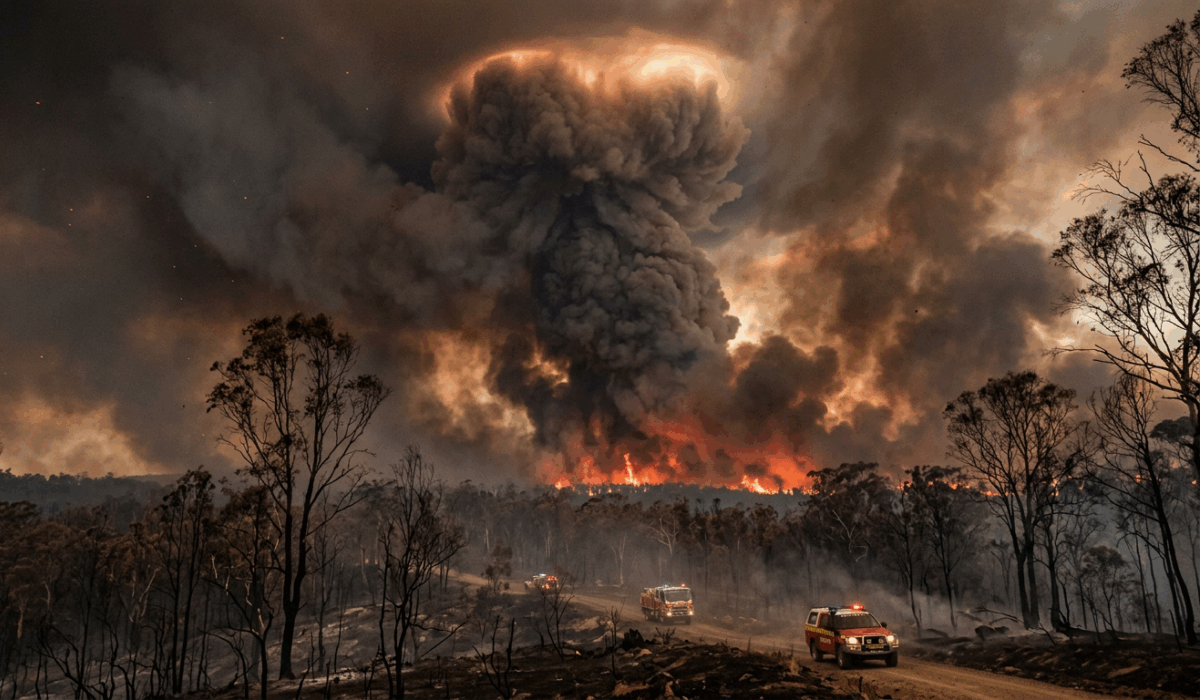
When a forest fire turns into a firestorm
When a forest fire turns into a firestorm
On the formation of one of the largest pyrocumulonimbus clouds over Europe to date: The story of extreme fire-driven convection leads to a meteorological first for France.
In the summer of 2026, France was confronted with a phenomenon previously known primarily from Australia, North America, and Siberia: a massive pyrocumulonimbus cloud—internationally referred to as PyroCb and meteorologically classified as *Cumulonimbus flammagenitus*.
Above an extremely intense forest fire in southwestern France, a distinct thunderstorm cloud formed from a rising column of smoke and heat. The fire front was thus no longer merely generating heat and smoke but had begun to create its own local weather system. French emergency responders described the event as unprecedented in the country.
A pyrocumulonimbus cloud forms when a fire releases enough energy to cause hot air to rise at tremendous speed. Within this massive convection column, smoke particles, water vapor, and combustion products are carried kilometers high. When the rising air reaches sufficiently cold layers of the atmosphere, the water vapor condenses to form a thunderstorm cloud.
The result is a paradoxical phenomenon: the fire generates a thunderstorm, and the thunderstorm, in turn, can intensify the fire. Through strong downdrafts, dry katabatic winds, and its own lightning discharges, a pyrocumulonimbus cloud can spark new fires and make the spread of a fire more unpredictable.
Hiroshima 1945: One of the earliest documented fire clouds
One of the most famous historical fire clouds was created following the dropping of the atomic bomb on Hiroshima, Japan, on August 6, 1945. The explosion initially generated extreme thermal radiation. Temperatures in the immediate vicinity of the blast center reached several thousand degrees Celsius. Thousands of buildings made of wood and paper ignited almost simultaneously.
A massive, rising column of hot air, smoke, and ash formed over the city. This phenomenon resembled a fire-induced convection cloud—an early form of what is known today as a pyrocumulus or pyrocumulonimbus cloud.
The decisive factor was the enormous simultaneous release of thermal energy.
Incendiary bombs and the development of firestorms in wars
Incendiary weapons designed to create large-scale fires were developed during the 20th century. Entire cities were subjected to incendiary bomb attacks, particularly during World War II. These attacks employed, among other things, incendiary agents that promoted the spread of massive fires. However, the extreme firestorms that devastated Hamburg in 1943, Dresden in 1945, and Tokyo in 1945 were not caused solely by the incendiary materials themselves; rather, they resulted from a combination of factors: a vast number of buildings burning simultaneously, dense urban development, the influx of oxygen driven by powerful updrafts, and the release of immense heat.
Well-known major events
- Bombing of Hamburg ("Operation Gomorrah", 1943): created one of the most well-known firestorms of the Second World War.
- Bombing of Dresden (1945): A combination of high-explosive and incendiary bombs resulted in a devastating firestorm.
- Bombing of Tokyo (1945): large-scale use of incendiary bombs against a city built predominantly of wood.
In physical terms, the principle resembles modern mega-fires: once a burning area crosses a critical energy threshold, it can develop its own dynamics.
Pyrocumulonimbus events of the last 20 years
Canada 2023
The 2023 wildfire season was extraordinary. Scientific analyses report approximately 140 observed pyrocumulonimbus events in Canada, accounting for the majority of the PyroCb activity recorded worldwide that year.
Australia – Black Summer 2019/2020
The Australian bushfires are considered one of the most extreme pyrocumulonimbus events of the modern satellite era. During the 2019/2020 fire season, 35 PyroCb clouds were observed. More than half of the documented fire-induced thunderstorms transported smoke particles directly into the stratosphere.
Particularly extraordinary:
- Smoke was transported to an altitude of about 35 kilometers.
- A massive plume of smoke circled parts of the Southern Hemisphere.
- Distinct atmospheric structures emerged.
Sichuan, China, 2020 and 2022
According to Chinese weather agencies, the wildfires have generated PyroCb clouds reaching altitudes of up to 14 kilometers.
California 2018–2020
Several major fires in California generated pyrocumulonimbus clouds:
- Carr Fire (2018)
- Mendocino Complex Fire (2018)
- Creek Fire (2020)
During the 2020 Creek Fire, a particularly impressive fire cloud formed, characterized by extreme updrafts and dangerous shifts in the wind.
Canada, British Columbia 2017
The 2017 Canadian wildfire season produced some of the most intense PyroCb events on record. The fires were so intense that smoke and heat were transported to high altitudes. These events were later compared to the 2019–2020 Australian fires.
Black Saturday, Victoria, Australia 2009
Extreme bushfires generated massive PyroCb towers that released so much energy that they dominated weather patterns over hundreds of kilometers.
Events since the 1980s
May 8, 1987: "Great China Fire", Northern Mongolia, China
Sep 10, 1988: Yellowstone National Park, Wyoming, USA
June 21, 1991: Baie-Comeau Fire, Quebec, Canada
June 21, 1991: Baie-Comea5. Aug 1998: Norman Wells, Northwest Territories, Kanonau Fire, Quebec, Canada
Sep 27, 1998: Khabarovsk, Russia
Aug 23, 1998: Khabarovsk, Russia
Aug 27, 2000: Jasper Fire, Black Hills National Forest, South Dakota, USA
August 19, 2000: Idaho, USA
May 29, 2001: Chisholm Fire, Alberta, Canada
June 10 – 19, 2002: Hayman Fire, Colorado, USA
June 20, 2002: Rodeo-Chediski Fire, Arizona, USA
Dec. 18, 2002: Victoria, Australia – Big Desert Wilderness Park
Jan. 27, 2003*: Southeastern Australia
1 Feb 2003: Southeastern Australia
Jan. 19, 2003: Canberra bushfires, Australia – generated an F3 fire tornado
May 4–6, 2003: Eastern Russia
Aug 18, 2003: Conibear Lake Fire, Wood Buffalo National Park, Canada
There was hardly any systematic satellite observation prior to 1987. The best-known early event is Hiroshima in 1945. There has been a sharp increase, particularly since 2002.
The Guinness Record:
The highest number of PyroCbs in a single summer occurred in the USA and Canada in 2002.
They are triggered by large forest fires, volcanic eruptions, and firestorms caused by nuclear explosions. Scientific study of these phenomena has only taken place over the last 20 years, which is why the list of events prior to 2000 is short. Since Australia’s “Black Summer” of 2019/20, however, they have been monitored more closely worldwide. Until 2010, data on many fires in Asia was not included in Western satellite databases such as TOMS or SAGE II; China itself has only been publishing PyroCb data for a few years.
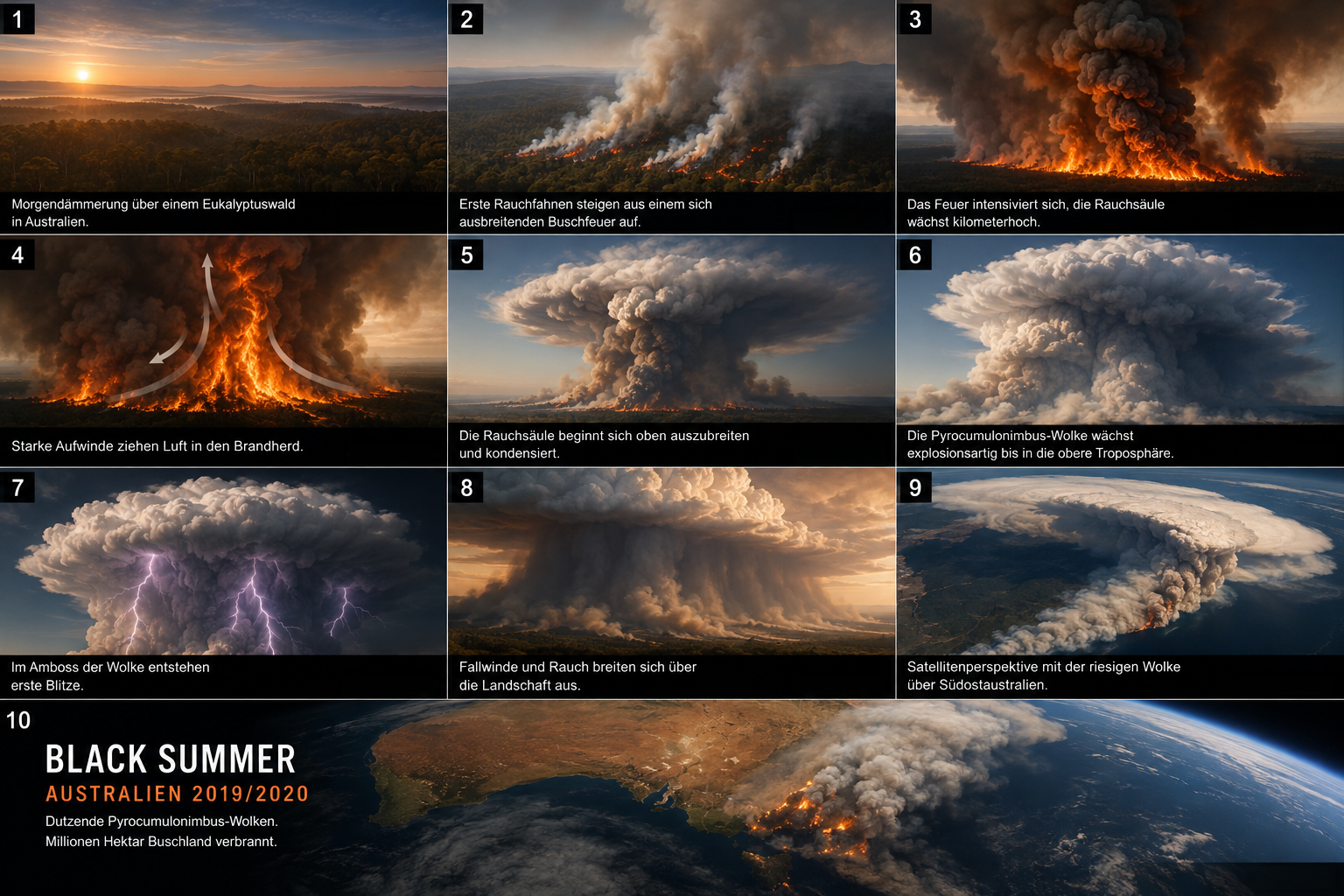
- From Bushfire to Pyrocumulonimbus Cloud
A New Era of Fire Dynamics
The increasing frequency of extreme pyrocumulonimbus events reveals a new dimension of modern large-scale wildfires. Many such events form and dissipate within just a few hours. Satellite observations from recent decades have, for the first time, enabled the systematic tracking of these fire-driven thunderstorms. A global inventory compiled since 2013 highlights the growing significance of this extreme coupling between fire and the atmosphere.
Researchers have calculated that the wildfires raging in central Spain in the summer of 2026 released thermal energy equivalent to that of 28 Hiroshima atomic bombs. However, no pyrocumulonimbus cloud formed there.
A pyrocumulonimbus cloud is no ordinary smoke plume. It is a sign that a fire has reached a scale where it interacts with the atmosphere. The fire ceases to merely destroy the landscape; it begins to generate its own weather.
The largest forest fires in France in the last 20 years
The most devastating fires were concentrated in the drought years of 2022, 2025, and the current record year of 2026:
- The fires in the Gironde department (July 2026): Driven by extreme heatwaves, the most devastating "mega-fire" in recent history raged near the Atlantic coast, southwest of Bordeaux. More than 42,000 hectares of forest burned in a single week. Tens of thousands of people had to be evacuated.
- The fire in the Corbières (August 2025): A massive fire in southern France destroyed more than 16,000 hectares region. At the time, the authorities described it as the most severe single fire incident since 1949.
- The Landiras and La Teste-de-Buch fires (summer 2022): Also in the heavily wooded Gironde region, just under 30,000 hectares burned in major fires. The fire in Landiras covered an area of 12,500 hectares.
- The Gonfaron / Massif des Maures Fire (August 2021): In the hinterland of the Côte d’Azur, in the Var department, a devastating fire destroyed around 7,000 hectares. valuable natural and forest areas.
A new all-time record
The year 2026 shattered all previous satellite measurement records. Due to extreme heat and dry soil conditions, around 100,000 hectares in France had already burned by the end of July 2026. area. This significantly exceeds the previous record year of 2022—which was already catastrophic (approx. 72,000 hectares)—and amounts to more than five times the long-term 20-year average.
The average annual temperature in France has risen by just under 1.1 degrees Celsius over the past 20 to 25 years (with a long-term warming rate of approximately 0.46 degrees Celsius per decade).
Data from the national weather service Météo-France show that this trend has accelerated dramatically, particularly in recent decades. France is warming about 30 percent faster than the global average. The years 2022 and 2023 were among the warmest on record, followed by a heatwave of historic intensity in the summer of 2026 that set new temperature records across the country.
That during the massive fire in the Gironde in France in July 2026, for the very first time ever the phenomenon of a pyrocumulonimbus cloud (PyroCb) occurred, that is likely because extremely rare, absolutely extraordinary conditions have to coincide. Normale Waldbrände erzeugen zwar oft kleinere Rauchwolken (Pyrocumulus), aber für ein echtes, kilometerhohes „Feuergewitter“ (Pyrocumulonimbus) müssen physikalische Grenzwerte überschritten werden, die in Westeuropa historisch bisher nur nach dem Einsatz von Brandbomben um 1945 erreicht wurden.
Images: AI-generated reproductions of a pyrocumulonimbus cloud over the 2019/20 Australian bushfire.

VIP Briefing for the Balearic Islands in August 2026
August 2026 promises to be one of the most extraordinary summer months the Balearic Islands have seen in decades. Alongside high-profile concerts, gourmet events, and traditional patron saint festivals, the highlight is a natural phenomenon of global significance: the total solar eclipse on August 12, 2026, with the path of totality passing directly over Mallorca, Ibiza, and Formentera. This makes the islands the most exclusive destination in Europe for the summer. The team at DeluxeMallorca would be delighted to book these experiences for you.
Exclusive experiences for discerning travelers, August 5–30, 2026

DeluxeMallorca on TV
Mallorca has increasingly become one of Europe's top residential locations boasting a growing number of wealthy residents and visitors. TV productions from Germany and the UK have long discovered Mallorca's potential and continuously report about the Island's upmarket businesses and properties, often in cooperation with Deluxe magazine.
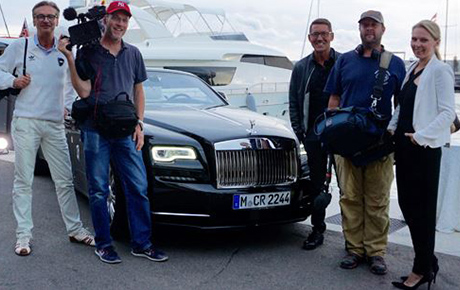
German Spiegel TV Reportage about a Rolls-Royce event in Mallorca
Party for millionaires Take a seat in a 390,000 euro luxury car? Rolls-Royce dealer Michael Gleissner makes it possible. However, he doesn’t sell most of his cars in Germany, but on Mallorca. A film by Ralph Quinke. Deluxe Mallorca organised the event weekends for the British car brand here for seven years. Birgit Unger was in front of the camera for the Spiegel TV film.

Goodbye Deutschland „Viva Mallorca“ on Vox (2015)
Deluxe Mallorca had organized the opening party of sports club RBC in Santa Ponsa, Mallorca. Goodbye Deutschland was present to report about the afternoon event with celebrities, veggie catering and fruit juice bar – only.

TV show RTL Punkt 12 (2014)
A camera team accompanied Birgit Unger, Editor of Deluxe Mallorca Magazine, for a report about the lives of two working mothers in Mallorca. The show Punkt 12 was broadcast on RTL on 20th and 21st February 2014.

German RTL Punkt 12 (2013)
A team from Filmreif TV accompanied Birgit Unger, Editor of Deluxe Mallorca Magazine, for four days as she worked on the summer 2013 edition of the magazine, interviewed a designer and visited the Superyacht Days in Port Adriano. The show Punkt 12 was broadcast on RTL on 23rd May 2013.

N-tv „DELUXE – Alles, was Spaß macht“ (2012)
N-tv ‚Deluxe – Alles, was Spass macht‘ spent a day accompanying the editor of DELUXE Mallorca Magazine, Birgit Unger, as she took a test drive in an AC Cobra on the Circuito Mallorca race track and visited the 34-metre Camper & Nicholson charter yacht ‚Itaca‘ in the port of Palma.
Regie: Stefanie Gotsis
Ton: Sebastian Lipphaus
Kamera: Peter Hanisch

DELUXE „Alles, was Spaß macht“ auf n-tv (2012)
Three time a week, n-tv’s luxury magazine programme ‘Deluxe – Alles, was Spaß macht’ brings reports about luxury objects that make life more fun. In each 45-minute programme, society expert Jennifer Knäble presents dream holiday destinations, showcases luxury limousines and reveals the latest fashion trends. Gourmets, too, get their money’s worth. In Mallorca, the programme series found in Prince Karl-Heinz von Sayn-Wittgenstein an extremely knowledgeable interlocutor. Le Deluxe Mallorca accompanied n-tv, and observed the development of the label ‘Fürst KH’, under which cigars and two wines are also marketed.

„Hallo mondän Balearen“ im ZDF (2012)
The German television broadcaster ZDF covered a DELUXE photo shoot featuring Lucas Cordalis, for which the musician and celebrity photographer Jan Kohlrusch selected two locations: the Nassau Beach Club on the Playa de C’an Pere Antoni in Portixol and Harry’s Bar in Palma—both popular haunts for celebrities. "Looking at these photos, you can see a deliberate departure from my usual image," Lucas Cordalis explained to ZDF editor Stefanie Wolf. In his conversation with her—part of the lifestyle magazine program "hallo mondän Balearen"—he spoke about both the entertainment industry and his private life.

SAT1 Breakfast Television (2012)
For the series ‘Die Urlaubsprofis’ (The Holiday Professionals) on Sat 1 Breakfast Television, editor Samuel Dürr and cameraman Robin Ahne spent a day shadowing Oliver Gekeler as he went about his work. By appointment, the German anti-ageing specialist at the MEDEX Medical Centre in Reutlingen visits his clients at home – even in Mallorca. Deluxe editor Birgit Unger met Oliver Gekeler in Puerto Portals to interview him about his minimally invasive treatment methods and innovations in the field of preventative medicine.

Austria DELUXE TV – Céline Roscheck (2011)
Majestic and elegant, seductive and remote, Céline Roscheck, top model and violin virtuoso is finally bridging the gap between chillout and classical, between mixer and Mozart. Her concert at Hotel Zhero, Palma de Mallorca in August demonstrated the arrival of a completely new genre that in addition to a crossover of sounds, also unites fashion and style with music. In shorts and a sequined top, Roscheck scored on three levels: as a virtuoso, a composer and a beauty queen.
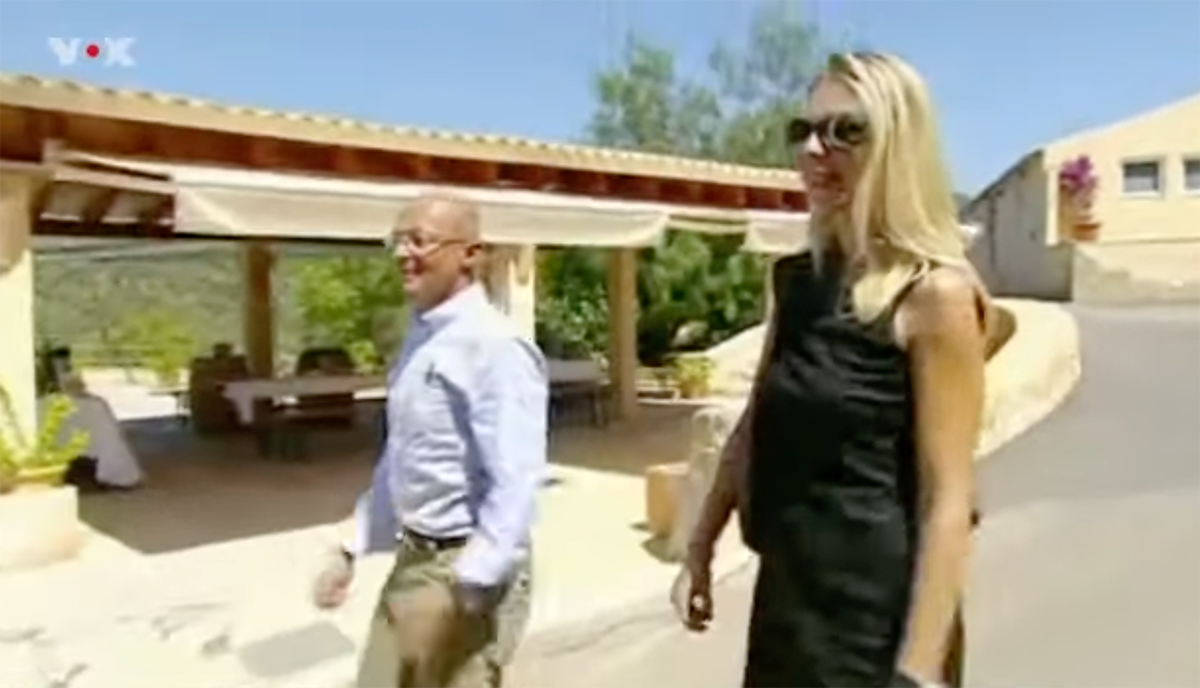
Mallorca damals und heute (2011)
In the four-hour VOX documentary ´50 years of Mallorca – the changing face of the party Island´ shown on 15th October, key witnesses from the Island – hoteliers, residents and journalists, including DELUXE editor Birgit Unger – provided the commentary between scenes of the horse and cart and cabriolet, between Franco and modern Spain, between the Boeing 727 and the Airbus jet, to give an eloquent overall picture. It also interweaves a photo shoot with actress Sonja Kirchberger with footage of the Mallorquín Matanza. A unique world, that also brought forth DELUXE magazine as the expression and the voice of its most elegant facets – a whole ten years ago.

Red @ the city – Mallorca (2011)
The beauty from Paraguay took part in a photoshoot for Deluxe that was shown in a Balearic special of the German Pro7 show ‚Red!‘
For DELUXE Mallorca Estefania Küster did a very special photoshoot with up-to-date fashion from Roberto Cavalli and Ermanno Scervino. The photoshoot was filmed by a team from Pro 7 television for a Balearic special of the show ‚Red!‘ which was aired shortly before this edition of the magazine came out. Filming took place at Estefania’s home, former stables, which the aspiring interior designer has refurbished with the help of several craftsmen and her partner Pino Persico (owner of Restaurant Campino in Camp de Mar), and turned into a real gem.
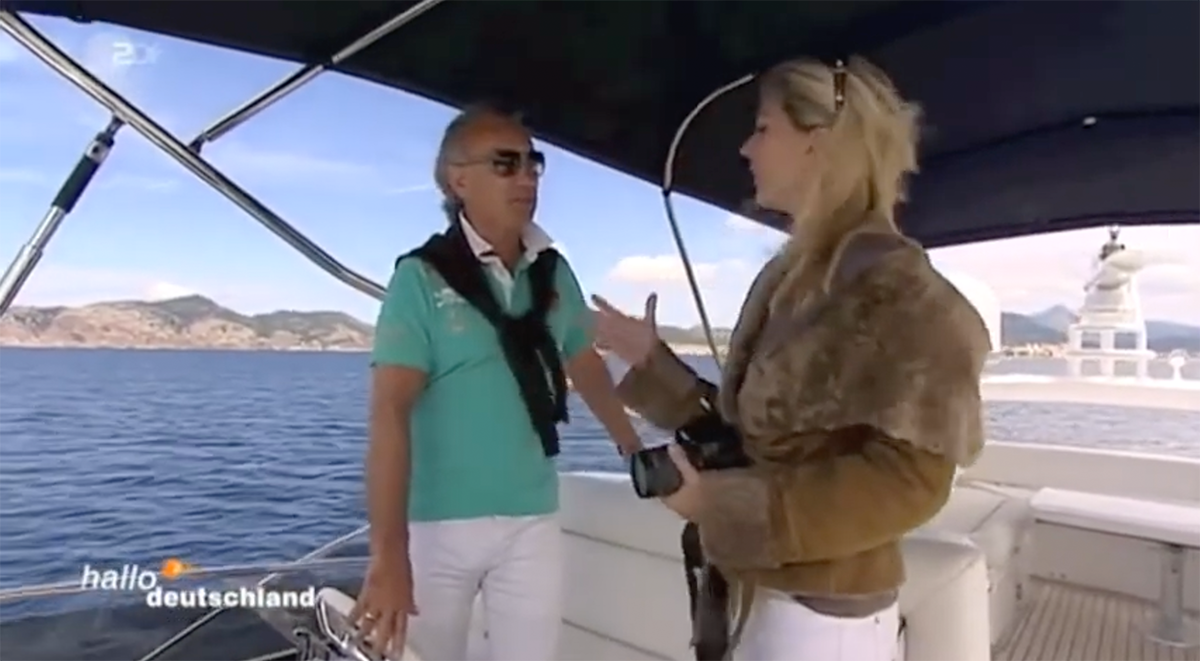
Hallo Deutschland (2011)
‚hallo deutschland‘ reports on Mallorca as a five-star destination
In mid June, as part of the programme ‚hallo deutschland‘, the television channel ZDF gave coverage to Mallorca as a luxury destination. The channel accompanied the editor of Deluxe Mallorca magazine Birgit Unger as she worked and interviewed her about her private life. The show gave readers a glimpse behind the scenes of the glossy magazine. ZDF observed her, for example, on the high seas on a visit to Sunseeker. For anyone who does not own a property on the Island, hotels are an important starting point. In one of the most exclusive, the St. Regis Mardavall, Birgit met up with the hotel manager Christian Hollweck, who showed her one of the suites – and also specialities from the kitchen of head chef Thomas Kahl.

Mieten, Kaufen, Wohnen (April 2011)
German television channel VOX explores villas with Birgit Unger: In exclusive regions where second homes are in high demand—a category that has long included Mallorca—an interior designer is as indispensable to a real estate agent as elves are to Santa Claus. The German television channel VOX demonstrated this once again on April 13th in its highly successful program, "Mieten, Kaufen, Wohnen" ("Rent, Buy, Live"). The show, which consistently draws excellent ratings among German viewers, once again shone a spotlight on modern luxury villas in Mallorca. In the episode, real estate agent Marcel Remus presented two premium properties in the island’s sought-after southwest to Birgit Unger, an editor for "Deluxe Mallorca."

Mieten, Kaufen, Wohnen (Dezember 2010)
The island’s potential was discovered by the successful German documentary series "Mieten, kaufen, wohnen" ("Rent, Buy, Live"), which has been broadcast almost daily at 6 p.m. on the channel Vox for the past three years, reaching up to two million viewers at its peak. The show offers the audience an insight into the local real estate market, which differs significantly from the one in Germany. The southwest of the island is particularly sought after—most notably Puerto Andratx and Sol de Mallorca. These are the very locations that Birgit Unger, publisher of the magazine "Deluxe Mallorca," chose when she and Marcel Remus toured two properties for a Mallorca special of the Vox series. The first episodes of the show, produced by the Cologne-based production company Fandango, aired in December 2010.

Sanlorenzo SL82 (2009)
In August 2009, Kurt Lehmann, Managing Director Sanlorenzo Baleari, exclusively invited a select number of clients to the two-star-Restaurant Tristán in Puerto Portals, Mallorca, for a cocktail reception and gourmet dinner to present a Sanlorenzo SL82 – a classic yacht with an innovative interior design concept and a new flybridge layout, that could be viewed at the Tristán pier during the event. The SL82 is a motor-yacht suited to travel long distances but also, as it is easy to control, for weekend cruising. Amongst the many high-profile guests of the Sanlorenzo presentation was Boris Becker with wife Lilly. Deluxe Mallorca reported about both the yacht and the event.

Hallo Deutschland ZDF (2008)
Mallorca was the logical choice to join Moscow, Dubai, Vienna and Munich as the latest venue to host a luxury trade fair. Spread over two days, the exclusive event was held at the breathtaking venue of the Hotel Blau in Porto Petro, Santanyi, in 2008. A get-together for exceptional people from all over Europe, this highlight of the social calendar showcased goods and products from over thirty select providers such as Quality Center Mallorca, who presented the latest Maserati Granturismo S, two Bentleys, the Aston Martin V8 Roadster, a Lotus Elise and the Ferrari F430 Spider. There was also a camera team from Germany’s second main broadcaster ZDF to cover the occasion. Presenter Stefanie Wolf interviewed several of the exhibitors as well as Deluxe Mallorca editor Birgit Unger for the TV show ‚Hallo Deutschland‘.
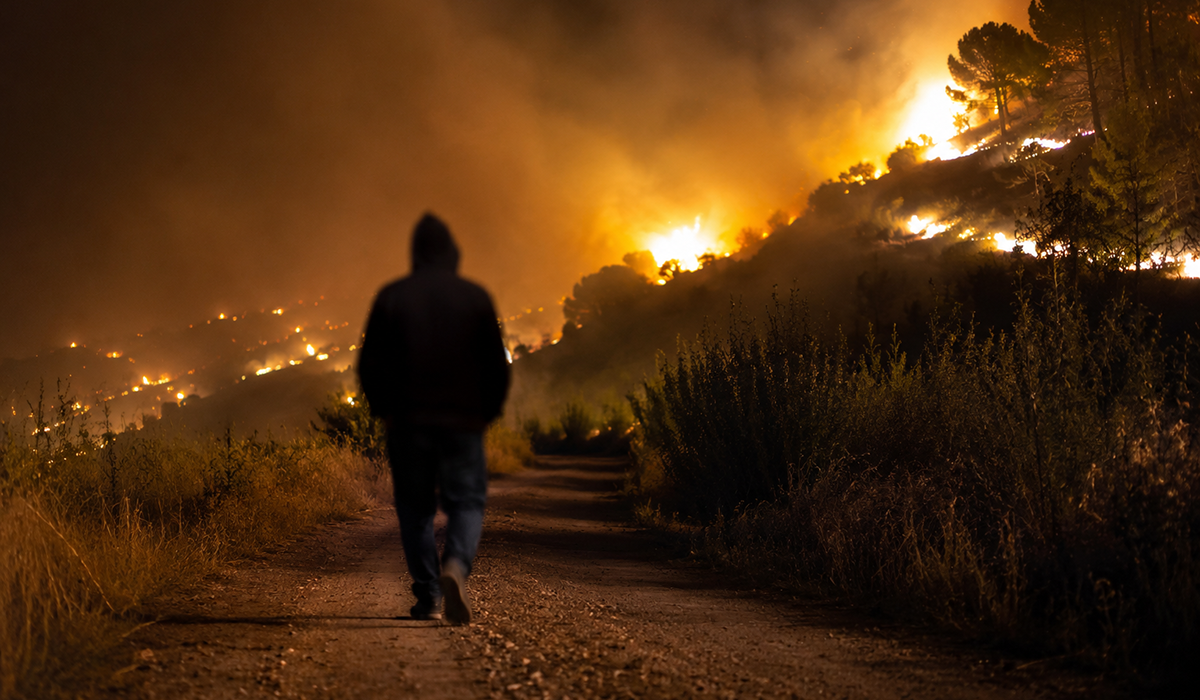
Climate crisis x crime: Europe is ablaze from Madrid to the Hautes Fagnes
Die südeuropäischen Megafeuer
- Provinz Ávila, Zentralspanien: Das flächenmäßig größte und laut Innenministerium „aggressivste Feuer in Spaniens Geschichte“. Eine vorsätzliche Brandstiftung wird hier ausgeschlossen; der Brand wurde mutmaßlich durch den verbotenen Einsatz und Funkenflug einer schweren landwirtschaftlichen Maschine bei Straßenarbeiten ausgelöst.
- Gironde / Bordeaux, Frankreich: Ein gigantisches „Megafeuer“, das rund 39.000 Hektar Wald vernichtete und zur Evakuierung von über 220.000 Menschen führte. Die Justiz hat hier Brandstiftung festgestellt; zwei Verdächtige wurden wegen des dringenden Verdachts, gezielt mehrere Brandherde gelegt zu haben, verhaftet.
- Region Huelva / Niebla, Andalusien/Spanien: Mit über 38.000 Hektar der größte Brand in der Geschichte Andalusiens. Es besteht starker Verdacht auf Brandstiftung, da die Brandherde zeitgleich nachts ausbrachen, um die Löschflugzeuge am Boden zu halten.
- Region Madrid / Castilla y León, Spanien: Ein Großfeuer erzwang die Evakuierung von 60.000 Menschen. Ermittler prüfen den dringenden Verdacht auf Brandstiftung oder schwere Fahrlässigkeit, da synchrone Brandherde entlang von Hauptverkehrsachsen aufloderten.
- Region Aragón, Nordostspanien: Über 16.000 Hektar verbrannte Erde. Die Ermittlungen zur Ursache laufen; Fahrlässigkeit wird im Umfeld landwirtschaftlicher Arbeiten vermutet.
Die Katastrophenherde am Mittelmeer und der Adria
- Porto Germeno / Viotia, Griechenland: Eine riesige Brandwand nordwestlich von Athen, angetrieben von Sturmböen. Die Anti-Brandstifter-Spezialeinheit der Feuerwehr ermittelt wegen des Verdachts auf Brandstiftung, getrieben durch illegale und kriminelle Bodenspekulation.
- Region Omiš / Split, Kroatien: Ein dramatisches Feuer erreichte Ferienresorts und zerstörte Fahrzeuge. Die kroatische Polizei hat hier vier Verdächtige wegen vorsätzlicher Brandstiftung verhaftet.
- Insel Salamis, Griechenland: Ein rasanter Brand, der sich binnen sieben Minuten ausbreitete, zwang Hunderte zur Flucht per Boot. Ermittler gehen von Brandstiftung aus.
- Distrikt Bragança, Nord-Portugal: Weite Teile geschützter ländlicher Vegetation wurden zerstört. Die Kriminalpolizei (Polícia Judiciária) hat mehrere Verfahren wegen Verdachts auf Brandstiftung eingeleitet.
- Rethymno, Kreta/Griechenland: Touristen mussten per Boot von den Stränden gerettet werden. Es besteht der Verdacht auf Fahrlässigkeit durch die verbotene Verbrennung von landwirtschaftlichen Abfällen im Hochsommer.
- Apulien & Sizilien, Italien: Rund um Palermo und an der Adria-Küste wurden Menschen übers Meer evakuiert. Die Behörden vermuten Brandstiftung durch die berüchtigte „Öko-Mafia“ oder extrem unachtsame Brandstifter.
- Region Chalkidiki / Siviri, Griechenland: Eine bis zu 30 Meter hohe Feuerfront trieb im August Hunderte Touristen an den Stränden ins Meer. Die Behörden prüfen hier akuten Verdacht auf Brandstiftung aufgrund mehrerer zeitgleicher Brandherde.
- Departement Var, Südost-Frankreich: Ein massiver Brand sprang im August auf die waldreiche Küstenregion über. Die Staatsanwaltschaft ermittelt wegen Verdachts auf Brandstiftung, nachdem verdächtige Kanister gefunden wurden.
- Distrikte Boticas und Chaves, Portugal: Schwere Grenzlände nahe Spanien, bei denen mehrere Feuerwehrfahrzeuge in Flammen aufgingen. Es wird Brandstiftung oder fahrlässiges Verhalten vermutet.
Die mitteleuropäischen und nördlichen Rekordbrände
- Hohes Venn, Ost-Belgien: Der historische Moorbrand im schwer zugänglichen Torfmoor vernichtete 3.000 Hektar. Die Staatsanwaltschaft Lüttich ermittelt; neben menschlicher Fahrlässigkeit wird auch Brandstiftung nicht ausgeschlossen.
- Département Landes, Südwest-Frankreich: Ein verheerendes Feuer vernichtete binnen drei Tagen rund 1.700 Hektar dichten Kiefernwald, bevor es stabilisiert werden konnte. Es besteht Verdacht auf Brandstiftung.
- Hürtgenwald / Eifel, Nordrhein-Westfalen/Deutschland: Der flächenmäßig größte Waldbrand in der Geschichte des Bundeslandes zwang 1.800 Menschen zur Evakuierung. Als Ursache wird menschliche Fahrlässigkeit vermutet.
- Suffolk-Küste, Großbritannien: Ein für britische Verhältnisse historischer Großbrand, der zur Ausrufung eines „Major Incident“, den Katastrophenfall, führte. Die Behörden ermitteln wegen Fahrlässigkeit.
- Wald von Fontainebleau, Frankreich: Ein seltener, verheerender Brand nahe Paris. Aufgrund der dichten Frequenz von Ausflüglern wird von Fahrlässigkeit ausgegangen, Ermittlungen wegen Brandstiftung laufen parallel.
- Ebbw Vale / Wales, Großbritannien: Schwere, unterirdisch schwelende Torfbrände. Die walisischen Behörden gehen primär von Fahrlässigkeit aus, schließen jedoch böswillige Brandstiftung nicht gänzlich aus.
Hybride Kriegsführung: Staatlich gelenkte Sabotage und Öko-Mafia
Was jetzt zu tun ist
Erstens müssen Brandursachen europaweit standardisiert erfasst werden: Zündquelle, Vorsatz, Fahrlässigkeit, technische Ursache oder natürlich. Zweitens sollten Satelliten-, Wetter-, Mobilfunk- und Ermittlungsdaten stärker zusammengeführt werden, um Brandserien und mögliche Täterstrukturen zu erkennen. Drittens würde Europa von mehr Prävention und Landschaftsmanagement profitieren.
Denn Klima und menschliche Zündung sind keine konkurrierenden Erklärungen. Der Mensch liefert häufig den Funken; ein heißeres, trockeneres Klima entscheidet zunehmend darüber, ob daraus ein kleines Feuer oder eine Großbrand wird. Aktuelle Studien zeigen, dass extreme Feuerwetterlagen nicht nur in Südeuropa wahrscheinlicher geworden sind.
„Die europäischen Waldbrände verursachten allein bis August 2026 Schäden in Milliardenhöhe. Eine Financial-Times-Auswertung errechnete Anfang August über 3 Milliarden Euro; eine umfassendere Modellrechnung von AccuWeather liegt bei 15,6 bis 19,1 Milliarden Euro. Eine belastbare Endbilanz wird erst nach der Brandsaison möglich sein.“
Header: KIgeneriert

Venomous fish species in the Mediterranean: What holidaymakers should know now
The Mediterranean is changing. As water temperatures rise, invasive fish species are spreading further west. Two species, in particular, are causing great concern among scientists, fishermen, and conservationists: the highly toxic silver-cheeked toadfish (*Lagocephalus sceleratus*) and the red lionfish (*Pterois miles*). Both are native to the Indian Ocean and entered the Mediterranean via the Suez Canal.
The silver-cheeked toadfish is currently considered the greater threat. It has already spread extensively in the waters off Greece, Cyprus, and Turkey, and is increasingly being detected in the central and western Mediterranean as well. With its powerful teeth, it destroys fishing nets, devours trapped fish, and displaces native species. Particularly dangerous, however, is its neurotoxin tetrodotoxin (TTX)—one of the most potent natural toxins known. Even small amounts can be fatal to humans. Consequently, this fish must under no circumstances be eaten.
To curb the spread, Greek authorities are now paying fishermen a bounty for every pufferfish caught. The goal is to bring the population under control, at least to some extent.
The red lionfish is also spreading rapidly. Its striking red-and-white stripes and long fins are spectacular, yet its dorsal spines contain a painful venom. As a highly successful predator, it consumes large quantities of small fish, thereby threatening the ecological balance of many coastal regions. Unlike the pufferfish, however, its flesh is edible once the venomous spines have been properly removed and is even considered a delicacy. Consequently, some Mediterranean countries are making concerted efforts to establish the red lionfish as a food fish.
To date, neither species is a common sight around Mallorca. However, as the Mediterranean continues to warm, marine biologists anticipate that the red lionfish in particular—and the silver-cheeked toadfish in the long term—could be spotted more frequently in the Balearic Islands.
Tips for swimmers and snorkelers
- Never touch unfamiliar fish with bare hands.
- When snorkeling, keep a safe distance from conspicuously striped or spherical fish.
- If you spot a red lionfish, avoid any contact with its spines.
- Under no circumstances should you catch a rabbit-headed pufferfish or keep it as a food fish.
- Photograph unusual sightings and report them—if possible—to local authorities or marine research projects.
There is currently no cause for concern for water sports enthusiasts. Encounters with these species remain rare, and the animals do not actively attack humans. Nevertheless, it pays to keep a watchful eye—for the Mediterranean is undergoing change, and its underwater world is shifting along with it.
Other invasive fish in European freshwaters
- Black-mouthed gobyThis small fish from the Black Sea region has proliferated extensively via canals in almost all major Central European rivers (such as the Rhine and the Danube) as well as in the Baltic Sea, displacing native bottom-dwelling fish.
- Sunfish: Originally from North America, it is spreading in many European lakes and ponds.