
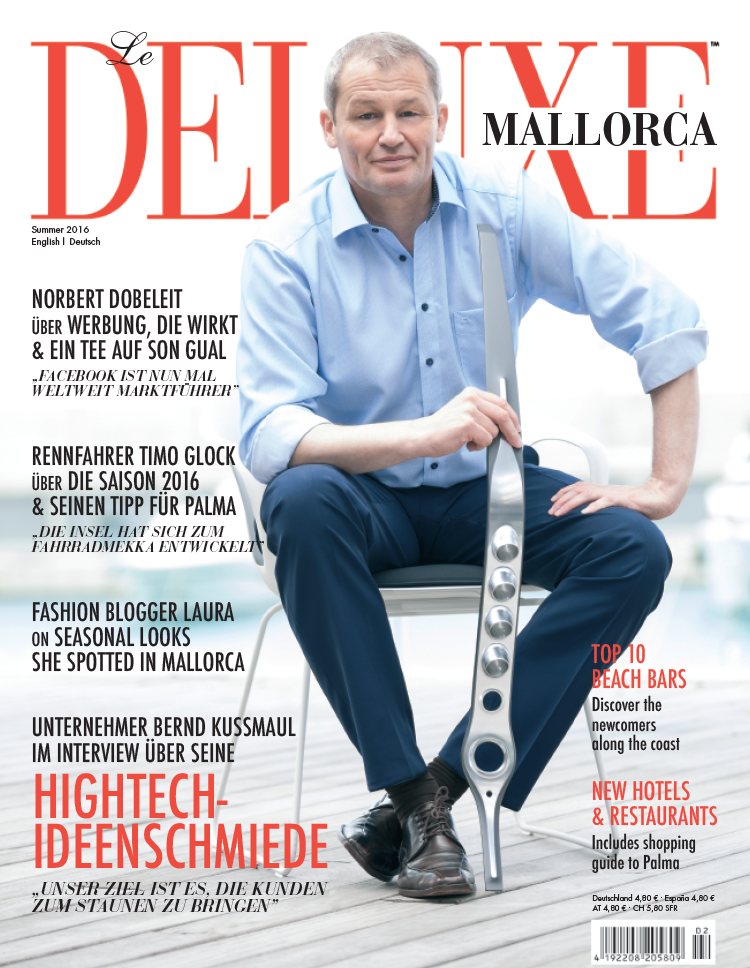
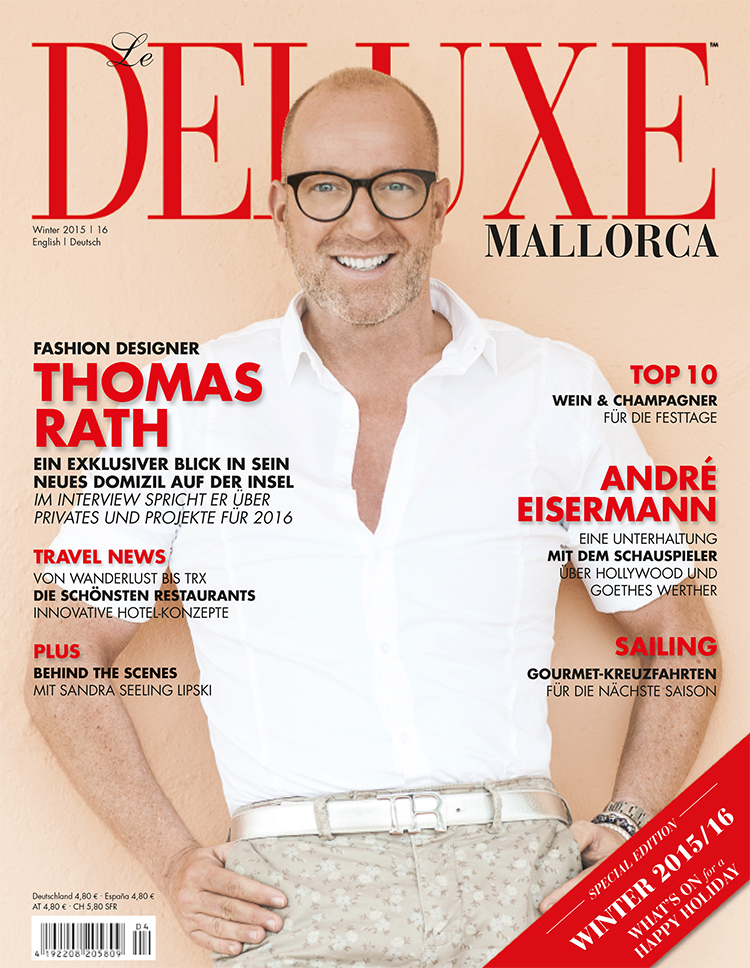
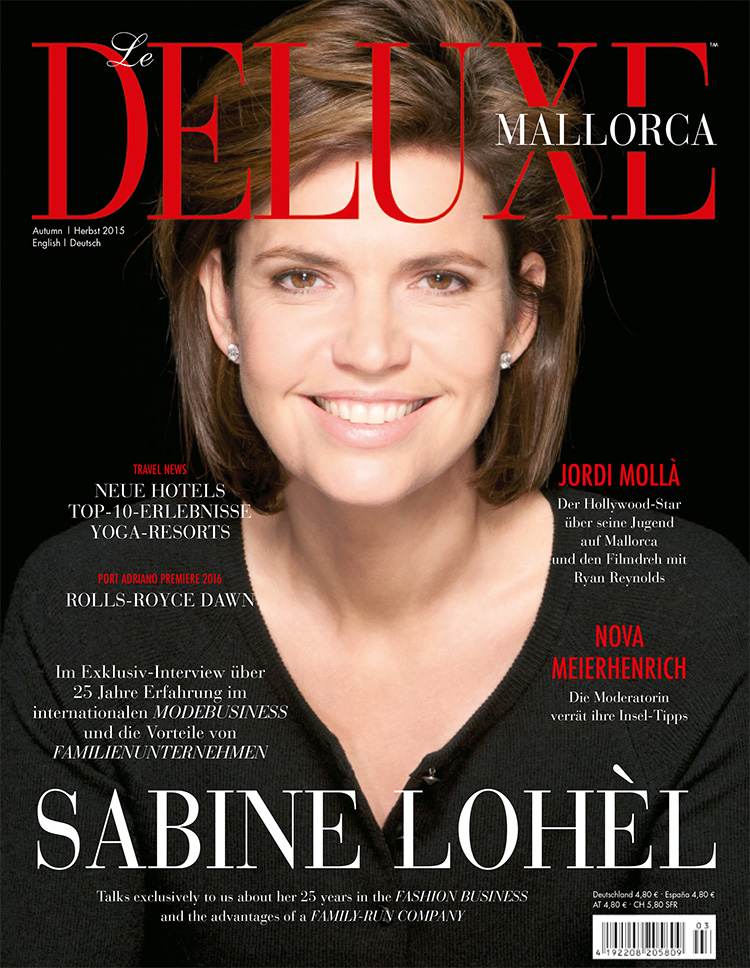
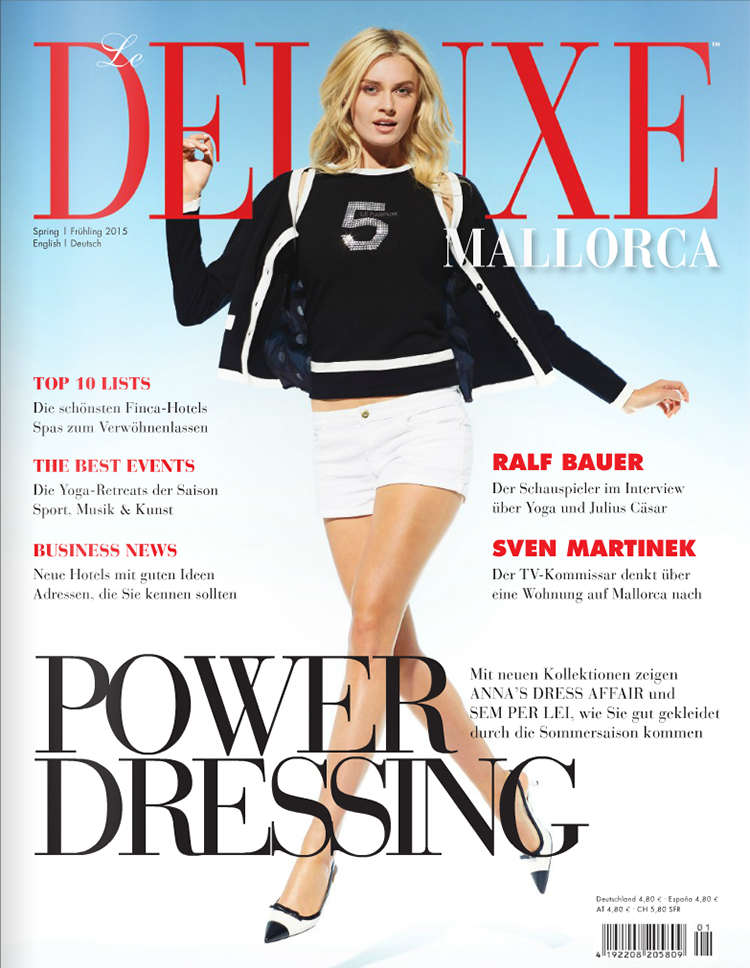
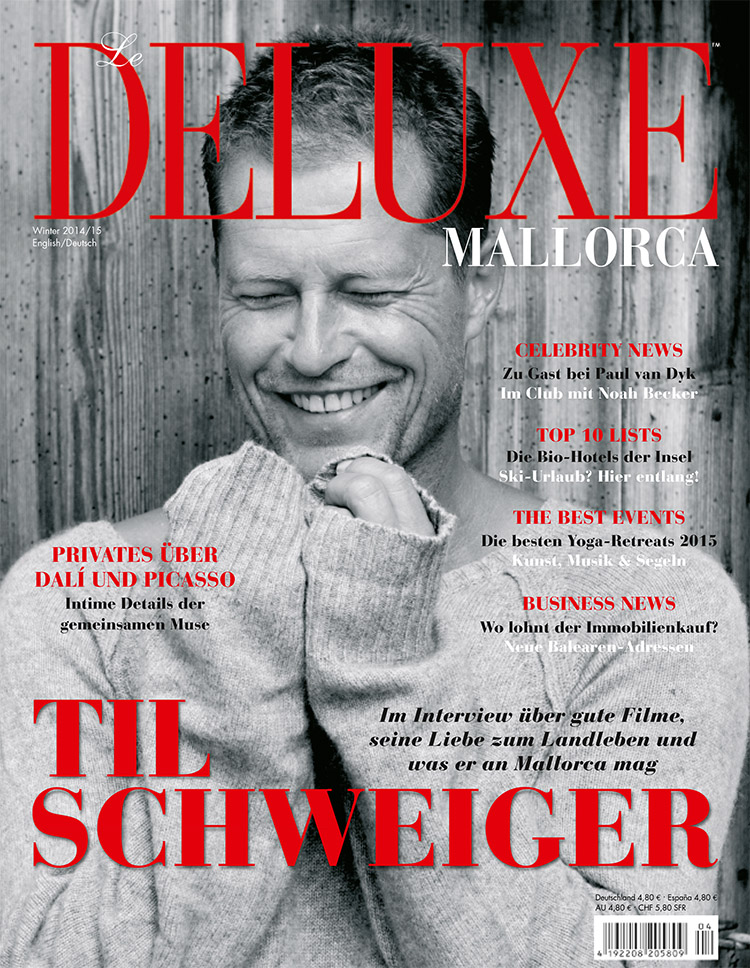
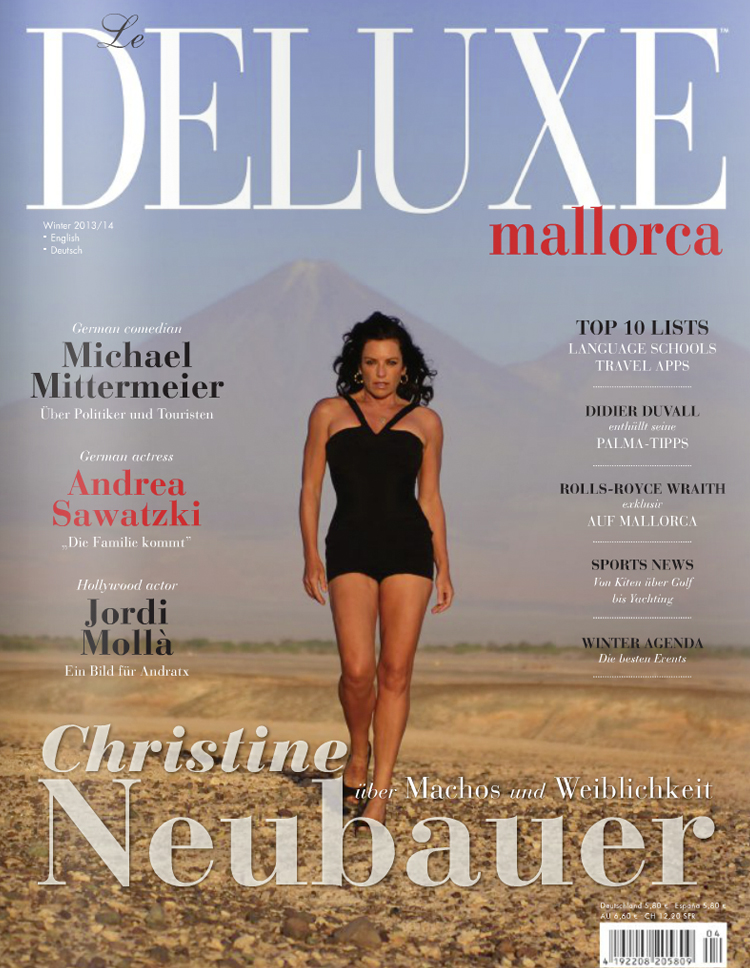
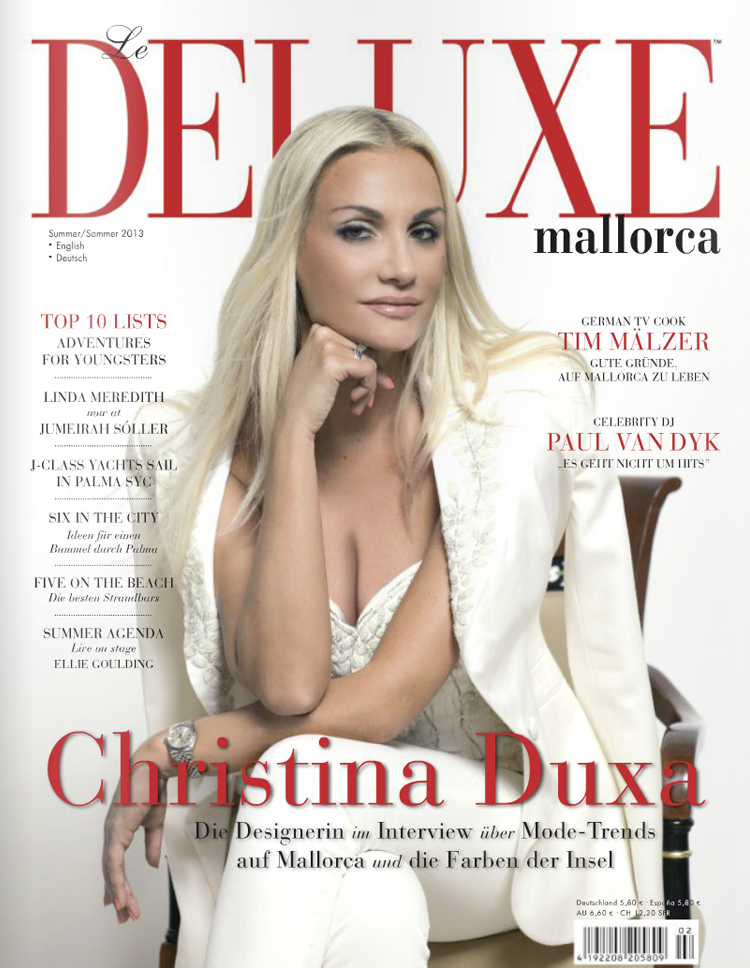
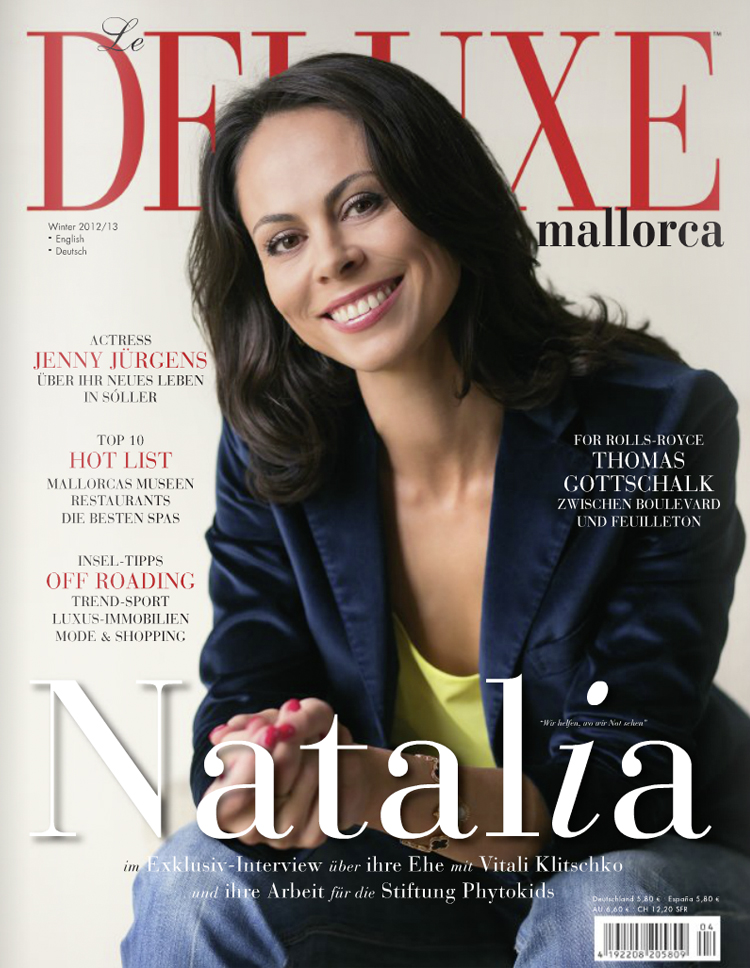
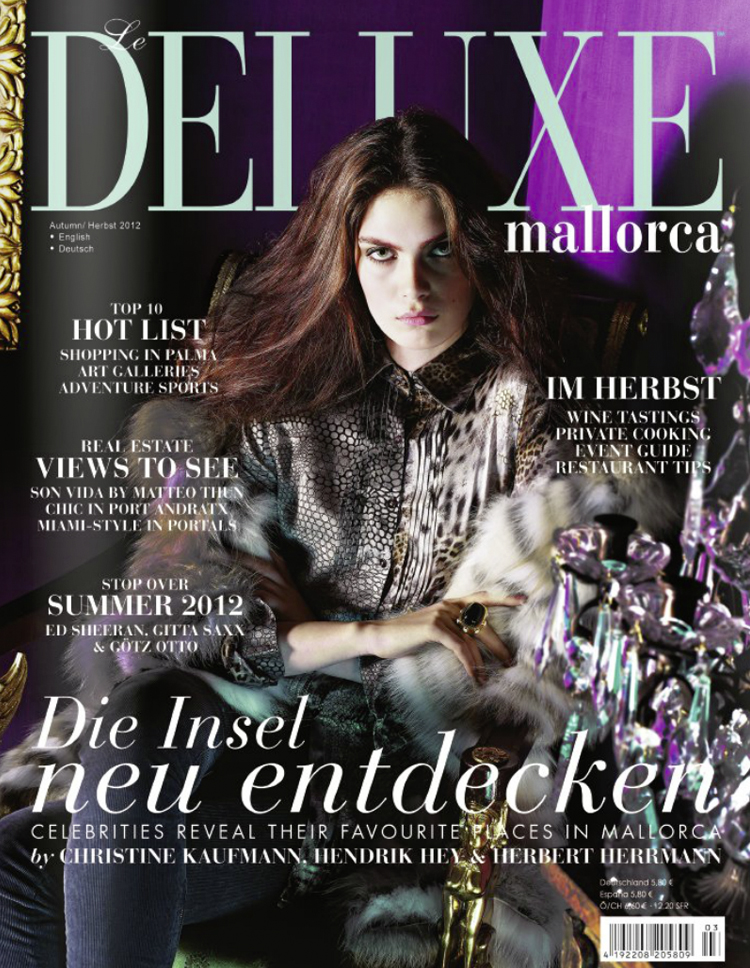
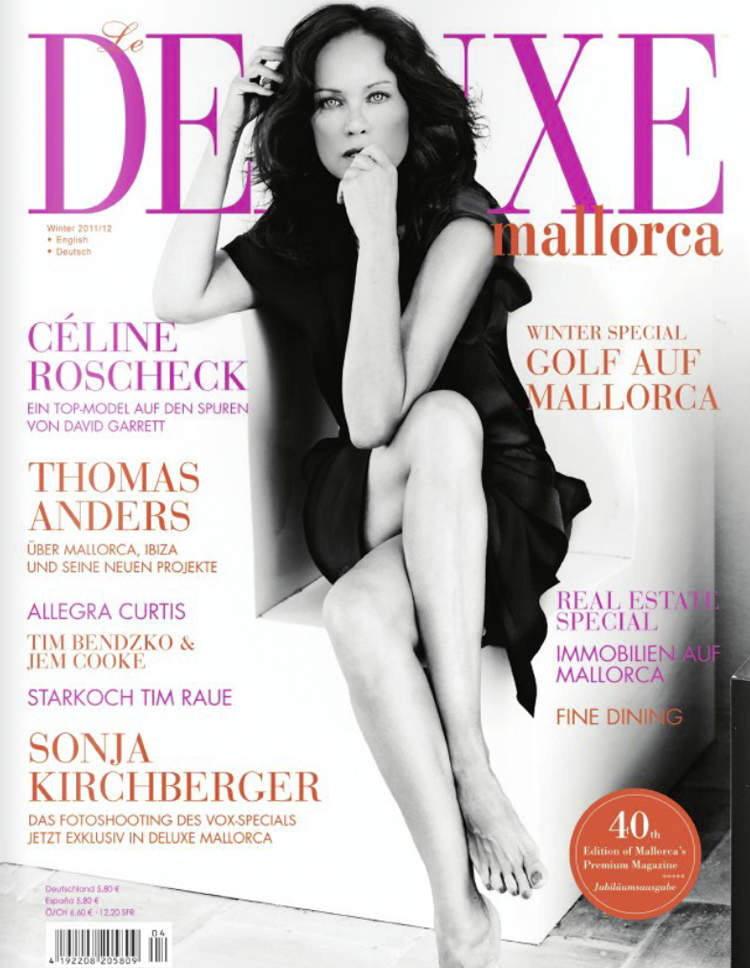
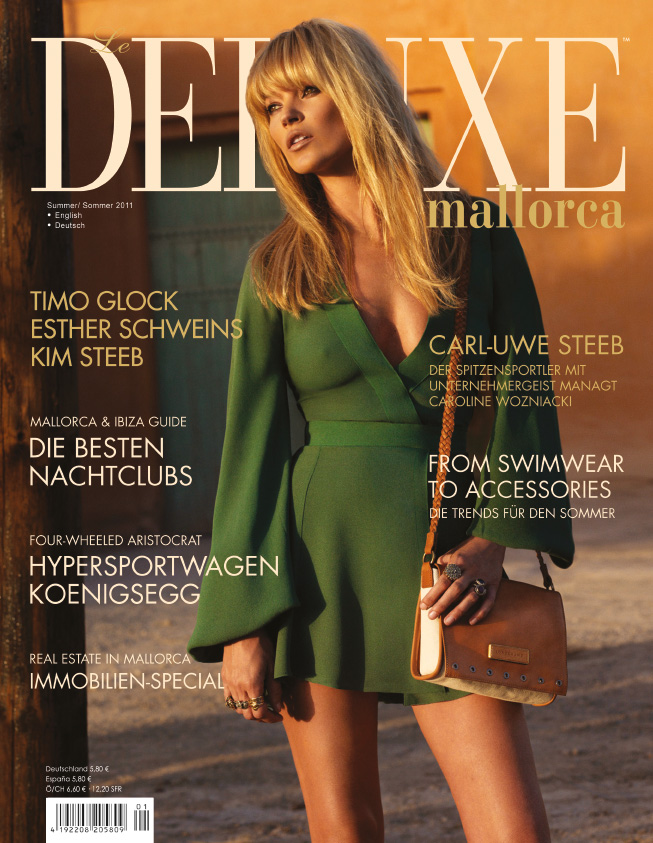
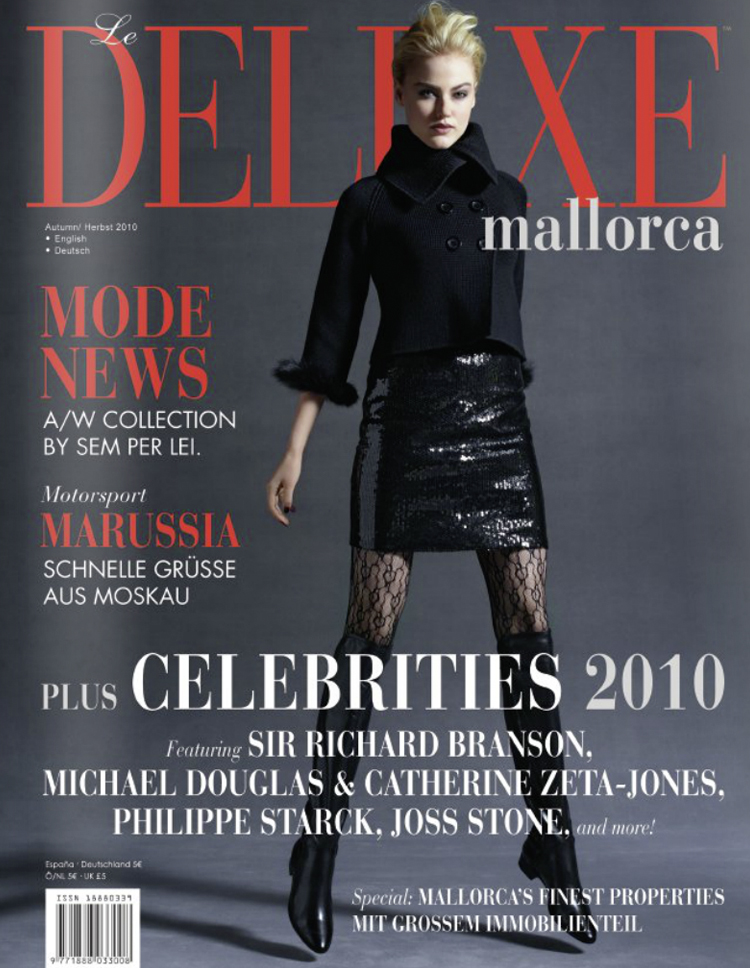
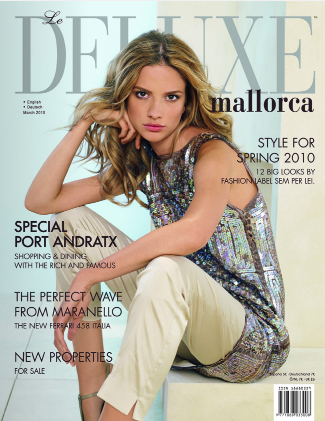
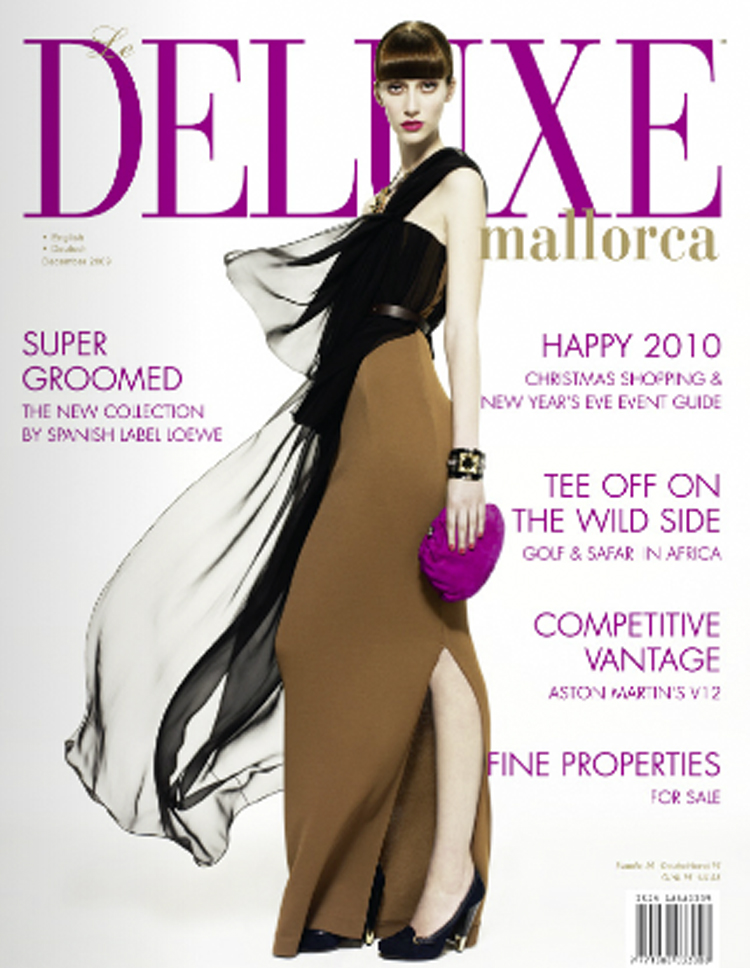
DeluxeMallorca als Magazin
Feiert mit uns 20 Jahre DeluxeMallorca.com
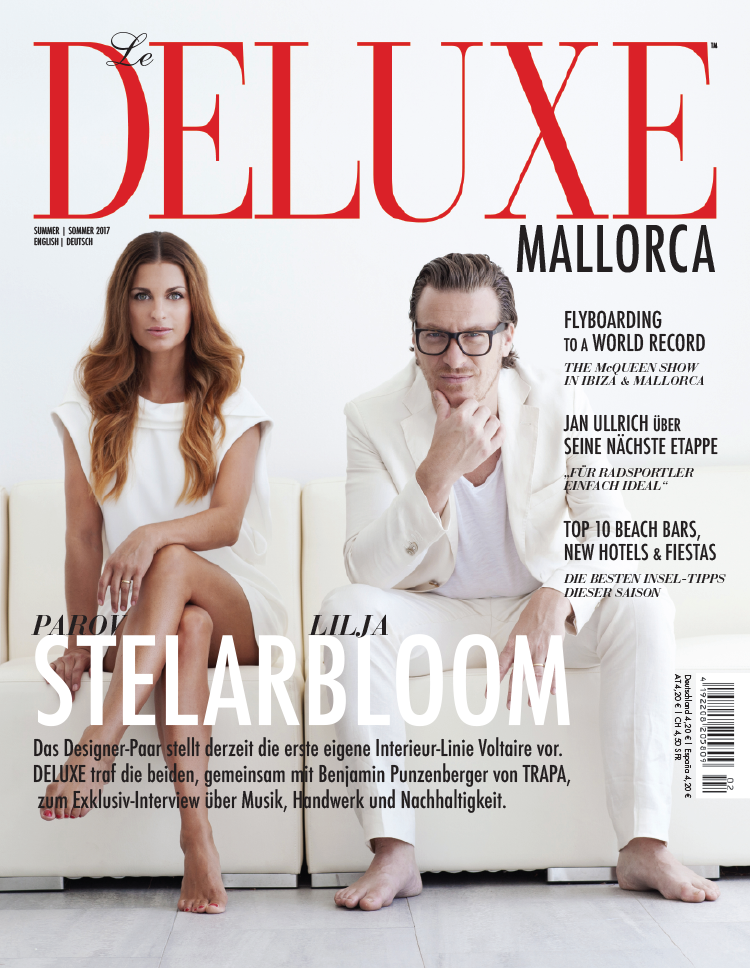
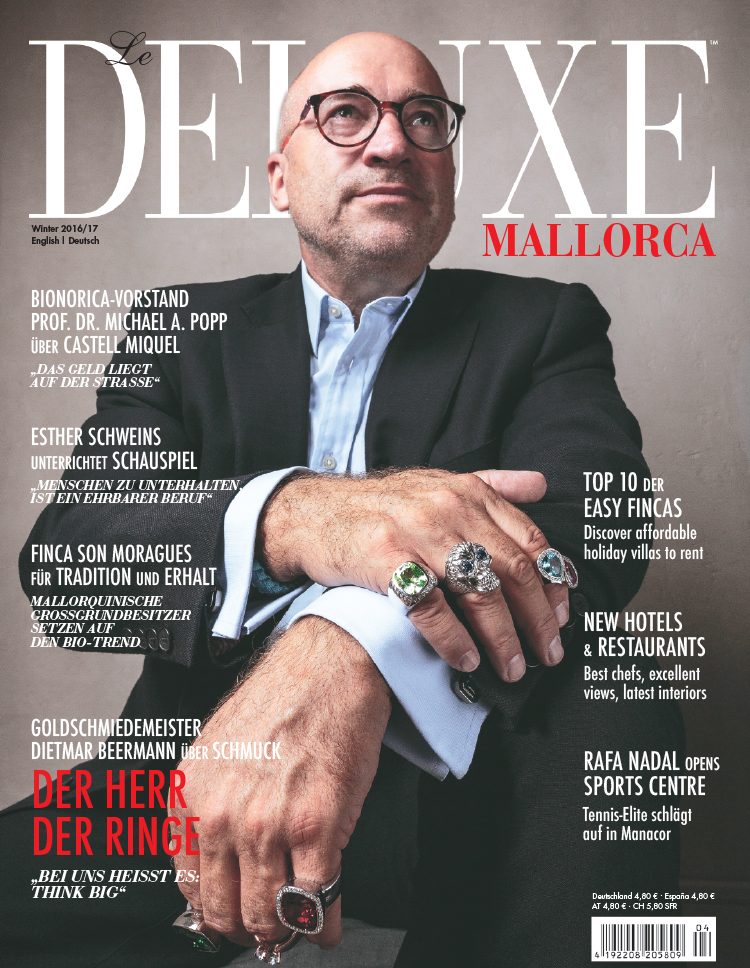
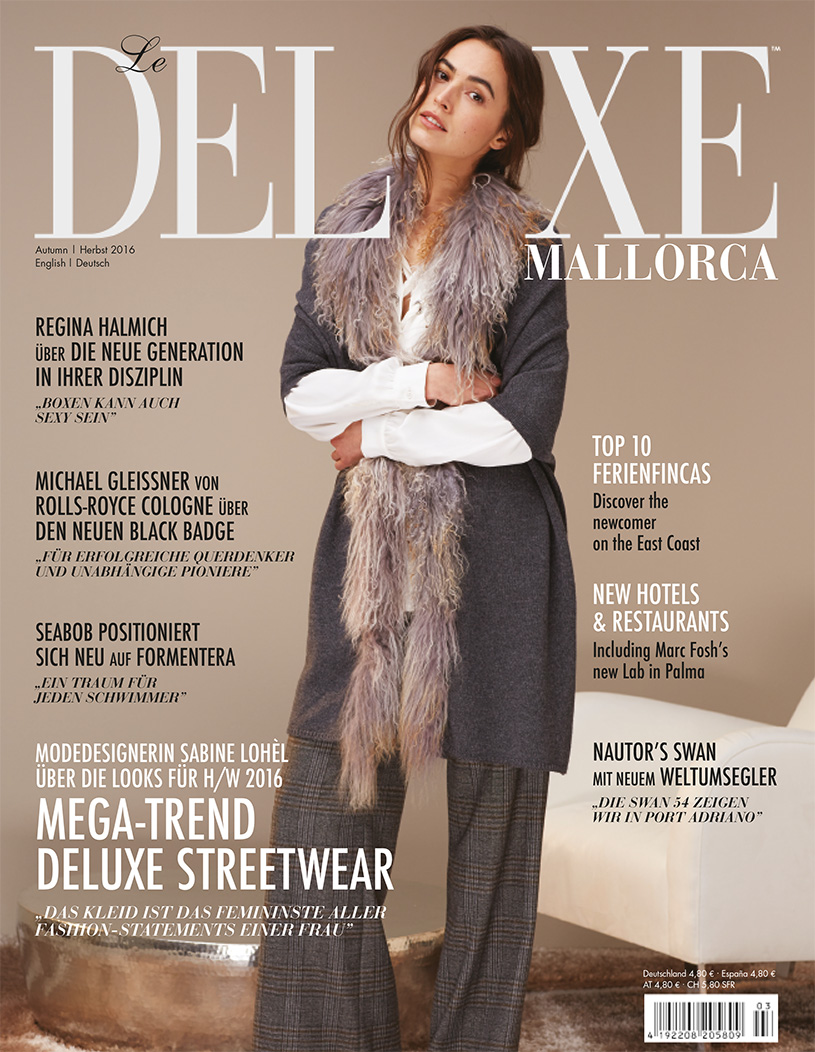
DELUXE war in den letzten 20 Jahren live dabei als Supermodel Heidi Klum das Clubschiff „Aida“ taufte, wir berichteten über das Wohltätigkeits-Golfturnier von „Kaiser“ Franz Beckenbauer. Tennislegende Boris Becker, Formel-1-Ass Ralf Schumacher, Modedesigner Guido Maria Kretschmer und der bekannte Schönheitschirurg Professor Werner Mang gaben Le DELUXE Exklusiv-Interviews. Die Schauspieler Till Schweiger und Jenny Jürgens sowie Musiker Lucas Cordalis und Politiker Wolfgang Kubicki gaben unseren Lesern exklusive Reisetipps für die Insel. Das Besondere daran: DeluxeMallorca erschien zweisprachig – auf Deutsch und Englisch. Viermal pro Jahr, pünktlich zum Saisonanfang.
Im März 2007 übernahm das neue Team das Hochglanzmagazin im Überformat, „Le Deluxe Mallorca“ war damals bereits zwei Jahre erschienen mit rund 230 Seiten voller Lifestyle- und VIP-News rund um die beliebteste aller Urlaubsinseln.
Seit 2017 erscheinen News auf DeluxeMallorca.com – online only.
Nun wird es Zeit für den nächsten Relaunch: Mit einer neuen Website, die mehr Gewicht auf die Buchung der Erlebnisse legt, die wir im Magazin vorstellen.




















VIP News für Mallorca & die Balearen
Here is the exclusive VIP briefing for the Balearic Islands for the period from September 21 to October 21, 2026. While Ibiza celebrates its legendary clubbing peak with spectacular closing parties, Mallorca focuses on high-caliber culinary culture, exclusive open-air events, and premium sports events.
Culinary & Cultural Tradition (Mallorca)
Festa des Vermar (Binissalem)
This traditional wine harvest festival celebrates its 60th anniversary edition this year. The ultimate VIP highlight for wine lovers is the Fira del Vi on September 26 and 27, 2026, in the Parc de Sa Rectoria, where the top bodegas of the DO Binissalem offer their most exclusive vintages for tasting.
Autumn Fairs & Gourmet Festivals
In early October, social life shifts to noble fincas and historic village centers. The Fira d’Alcúdia (October 2 to 4) captivates visitors with a blend of artisan crafts and regional gastronomy. In mid-October, culinary gourmets are also drawn to the Fira de la Llampuga in Cala Ratjada, where everything revolves around the exquisite dolphinfish (mahi-mahi).
Premium Sports & Lifestyle Events (Mallorca)
Challenge Peguera-Mallorca (17 Oktober 2026)
This high-caliber middle-distance triathlon attracts the international sports elite to the coast of Calvià. VIP lounges at Playa de Torà offer the best views of the spectacle.
TUI Palma Marathon (18 Oktober 2026)
A sporty lifestyle event set directly against the majestic backdrop of Palma Cathedral. The coastal course offers spectacular views and is embedded in a long weekend full of exclusive side events in the capital.
Premium Sports & Lifestyle Events (Mallorca)
Challenge Peguera-Mallorca (17 Oktober 2026)
This high-caliber middle-distance triathlon attracts the international sports elite to the coast of Calvià. VIP lounges at Playa de Torà offer the best views of the spectacle.
TUI Palma Marathon (18 Oktober 2026)
A sporty lifestyle event set directly against the majestic backdrop of Palma Cathedral. The coastal course offers spectacular views and is embedded in a long weekend full of exclusive side events in the capital.
Tip for your stay
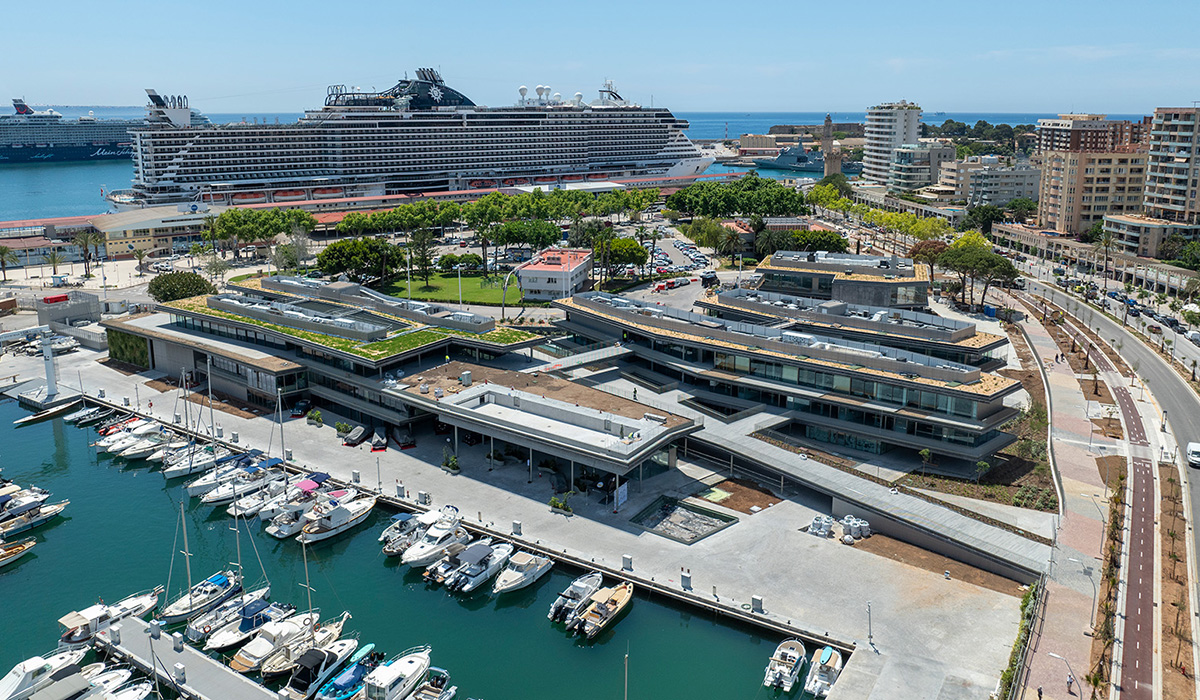
Temperatures in October often still reach a pleasant 22–25 °C (72–77 °F), the sea remains warm, and marinas such as Port Adriano or Puerto Portals offer the perfect setting during this period for more discreet, late-summer premium experiences away from the summer crowds.
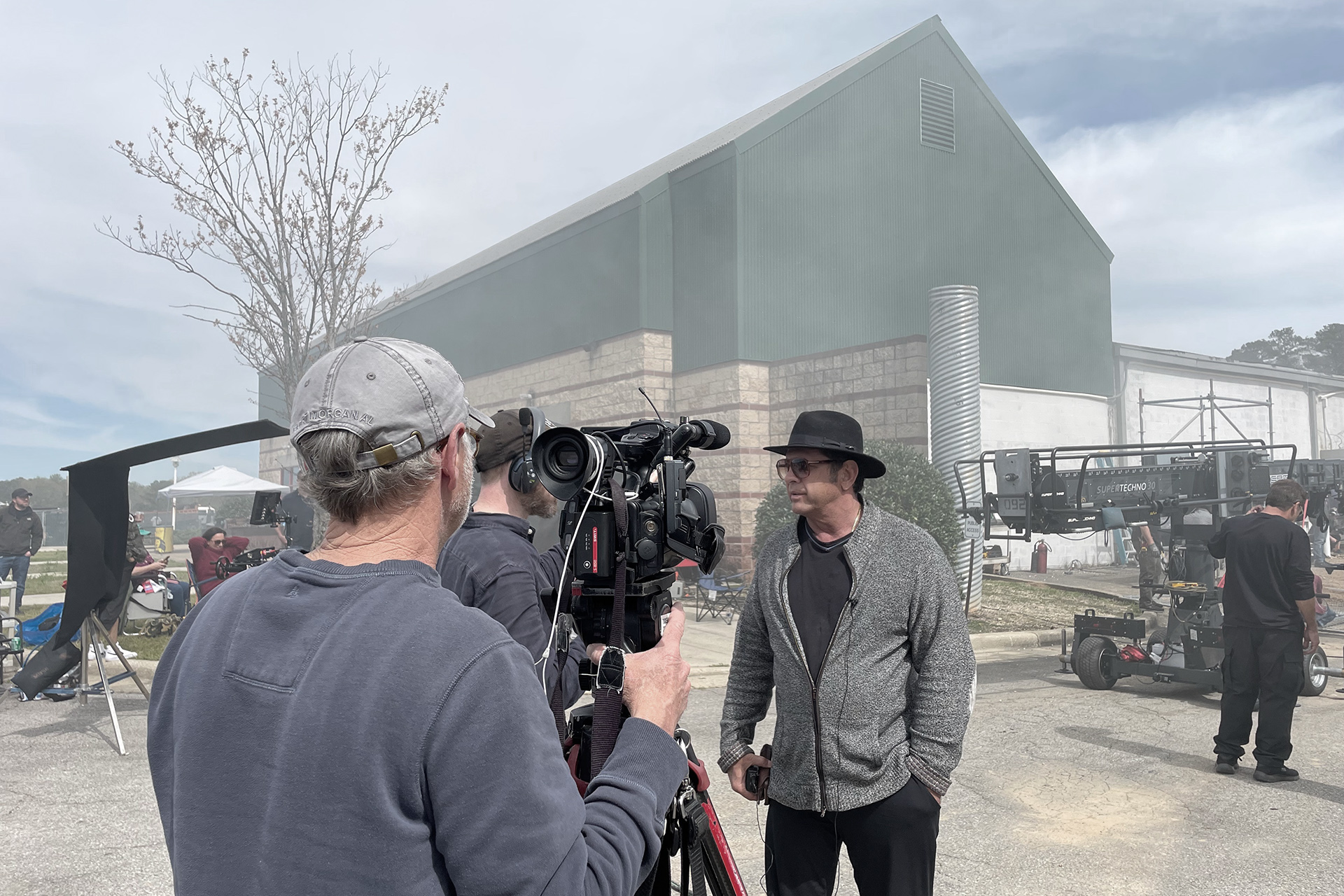
FilmHaus Award-Winner Dimitri Logothetis Announces New Heist Thriller
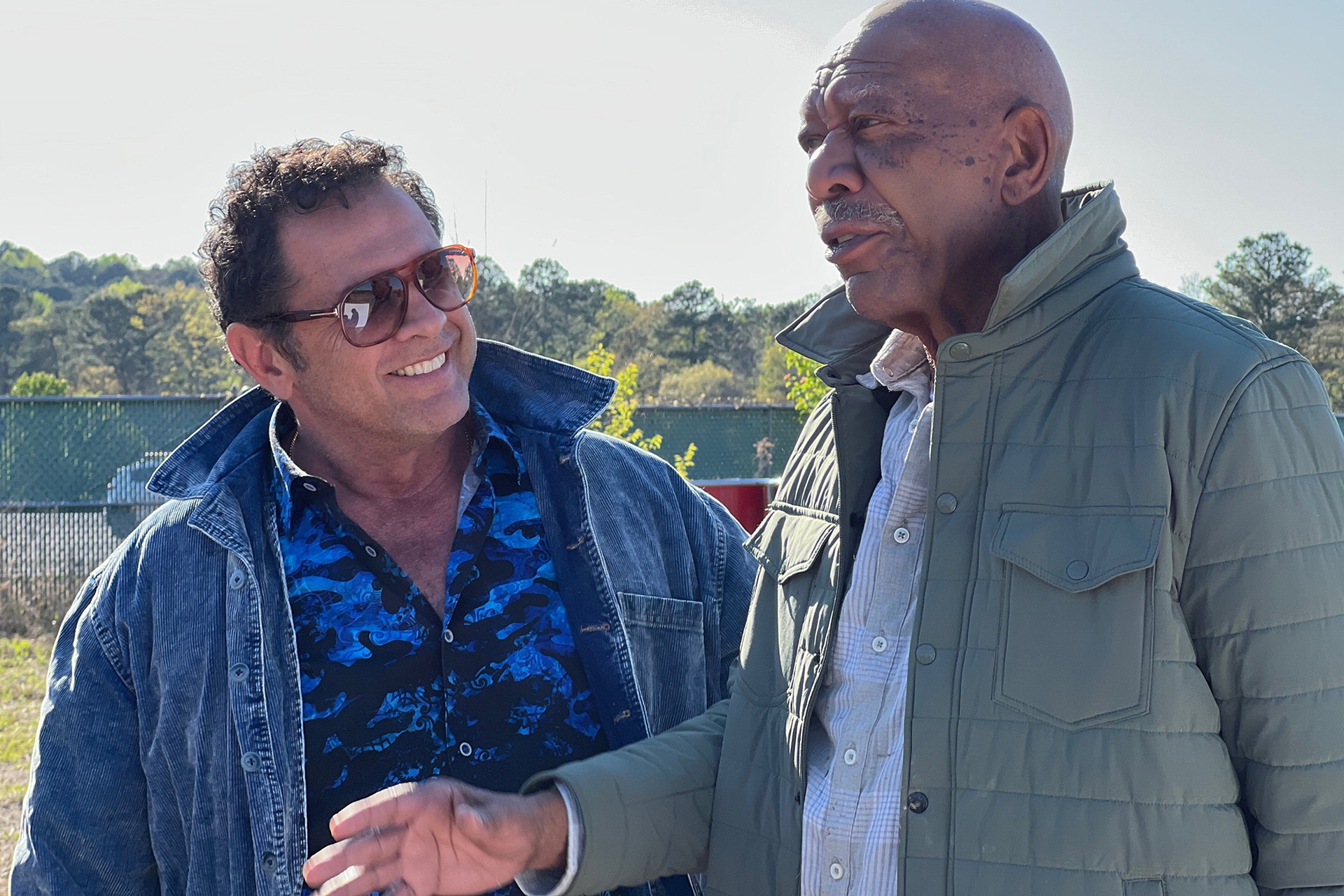
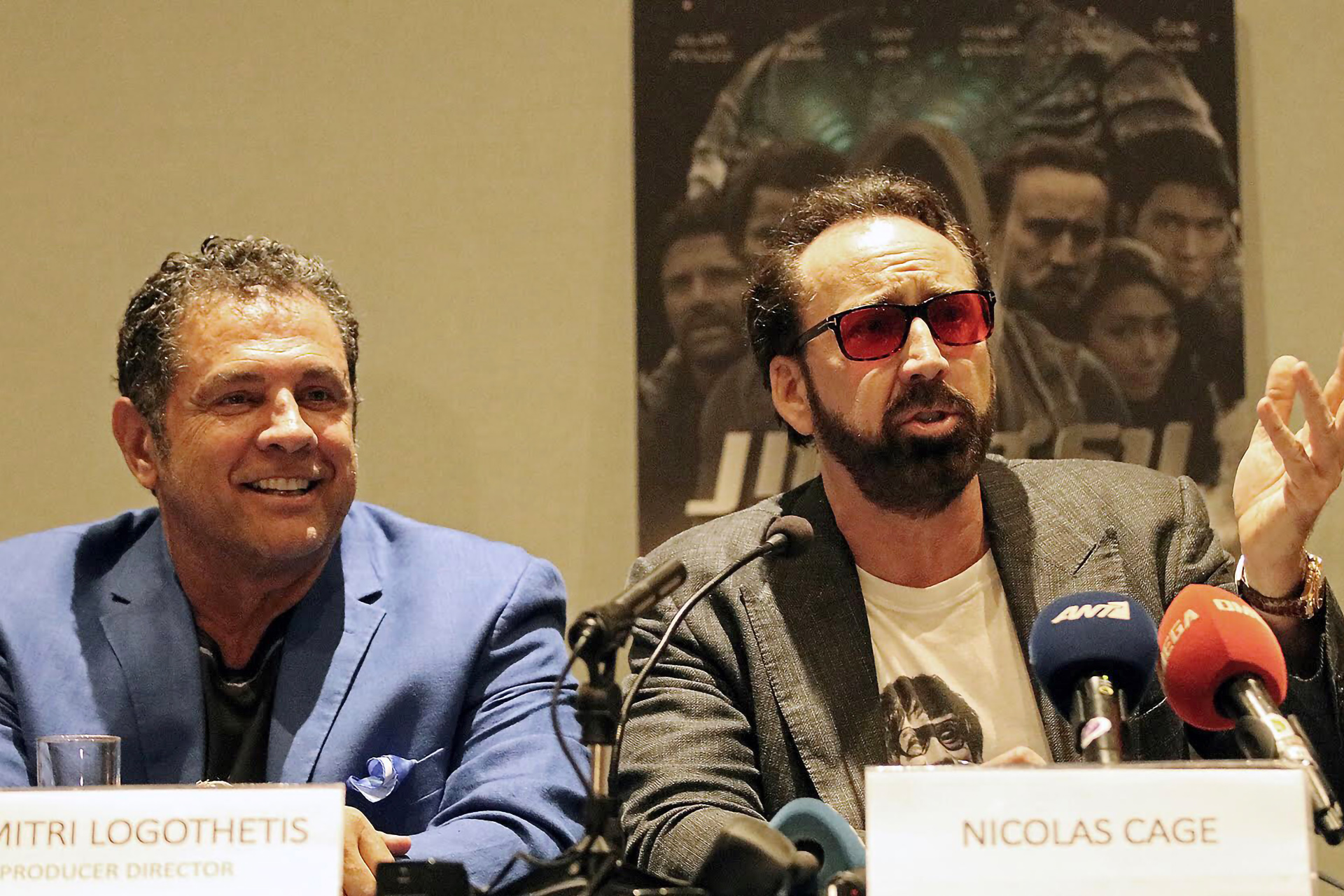
The Gunner director, awarded Best Action Drama in 2025, has hinted that one of Europe's most significant cultural treasures could become the target of an audacious cinematic heist. Dimitri Logothetis is planning his next project: a heist thriller set in Europe, which he has written and intends to direct himself. The Greece-born filmmaker, who now lives in Los Angeles, was awarded Best Action Drama for Gunner at the 2025 FilmHaus Film Awards.
Title and the exact target of the heist are still being kept under wraps. However, he is willing to drop a hint: the thieves are not after money.
The plot centres on a robbery of cultural treasures intended to be repatriated to Greece; filming will take place across several European countries. The prize, he says, is one of the world's most famous cultural artefacts, whose history holds particular significance for Greece.
‘If they pull this off, it would be the heist of the century,’ says Logothetis. ‘But what they want to steal — and why — is what makes the story interesting. It is not simply about getting rich.’ He refuses to say more. The story revolves around the ongoing debate over treasures stored far away from the countries claiming them. For a Greek-American filmmaker, this is a highly topical and sensitive issue.
Logothetis has dedicated his career to independent action cinema, working with actors who are also accomplished martial artists. He wrote, produced, and directed the studio-free Kickboxer reboot — Kickboxer: Vengeance and Kickboxer: Retaliation — bringing back Jean-Claude Van Damme as a combat mentor and casting Alain Moussi alongside martial arts world champions such as Dave Bautista, Georges St-Pierre, Gina Carano, and Mike Tyson. Two films have already been released. A third Kickboxer instalment is in the works. This meets the expectations of martial arts audiences.
Next came the science-fiction martial arts film Jiu Jitsu, starring Oscar-winner Nicolas Cage and Tony Jaa, followed by Gunner (2024), featuring Luke Hemsworth as a former Special Forces soldier who takes on a criminal organisation after his sons are kidnapped. Morgan Freeman stars alongside him.
Gunner has won more than 40 awards on the independent festival circuit, including Best Action Drama at the FilmHaus Film Awards (2025). Logothetis was also named Best Director at the London International Filmmakers Festival, alongside further directing accolades in Dublin, Tokyo, Hong Kong, Montreal, Palermo, and Los Angeles. The film won Best Action at the City of Angels Film Festival and the San Diego International Film Awards, as well as Best Feature and Best Picture in Prague, Florence, Oslo, Vancouver, and New York. Hemsworth was honoured as Best Actor at the FirstGlance Film Festival Los Angeles, while Freeman was named Best Actor at the Los Angeles Movie & Music Video Awards.

‘Working with Freeman and Hemsworth was great; they carry the film. The awards are a bonus. You might think nobody cares about independent action films — this proves the opposite.’
With that, the venture was made public: a heist spanning several European countries, cultural treasures, and a return to Greece. The film is set to be cast with European actors alongside well-known Hollywood names.
‘The best heists start with everyone thinking: that is simply impossible.’



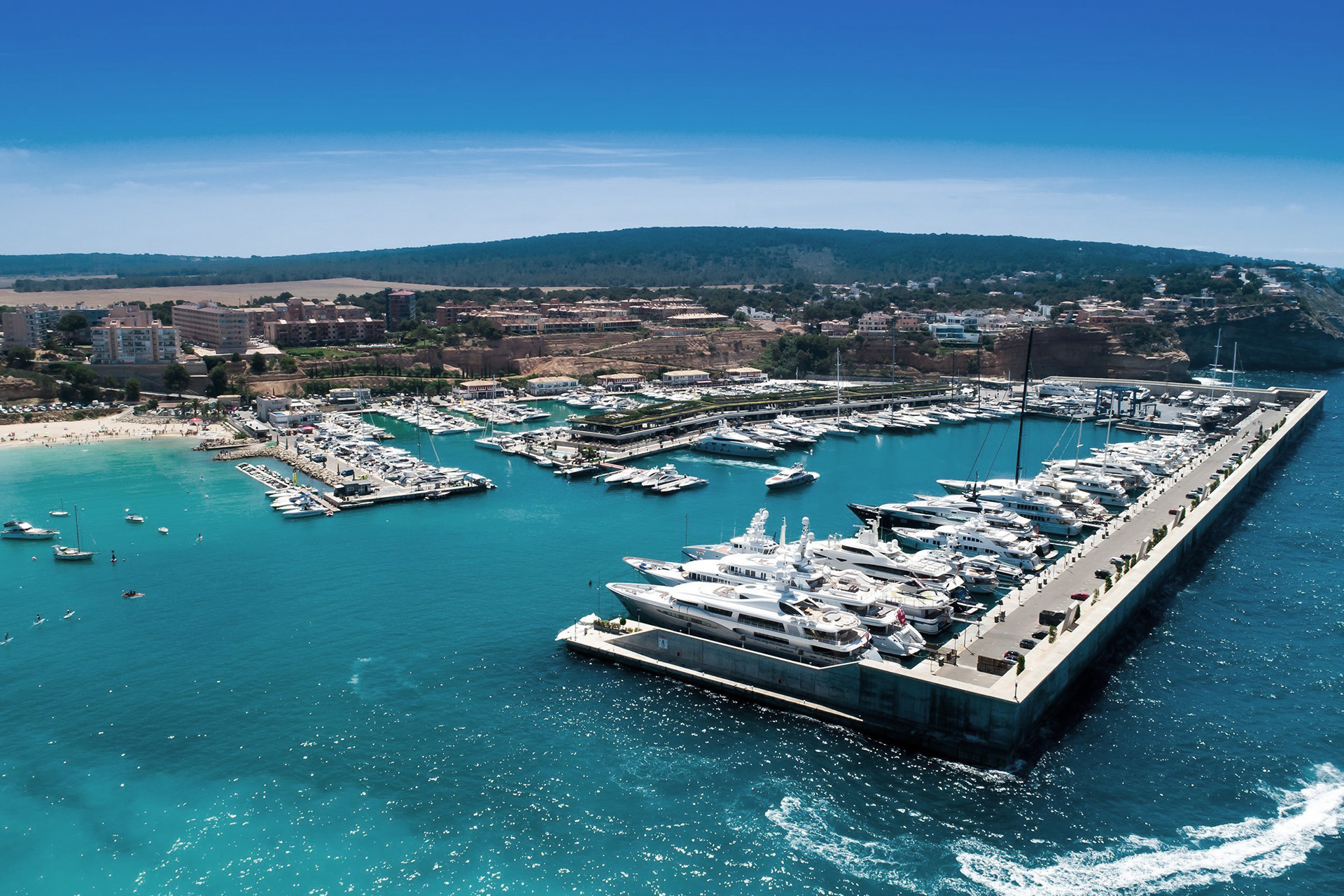
VIP briefing on the Balearic Islands in September 2026
Here is your exclusive VIP briefing on the Balearic Islands up to mid-September 2026.
For the remainder of September 2026, the Balearic Islands will be showcasing top-class cultural events, traditional fiestas and world-famous club closing parties.
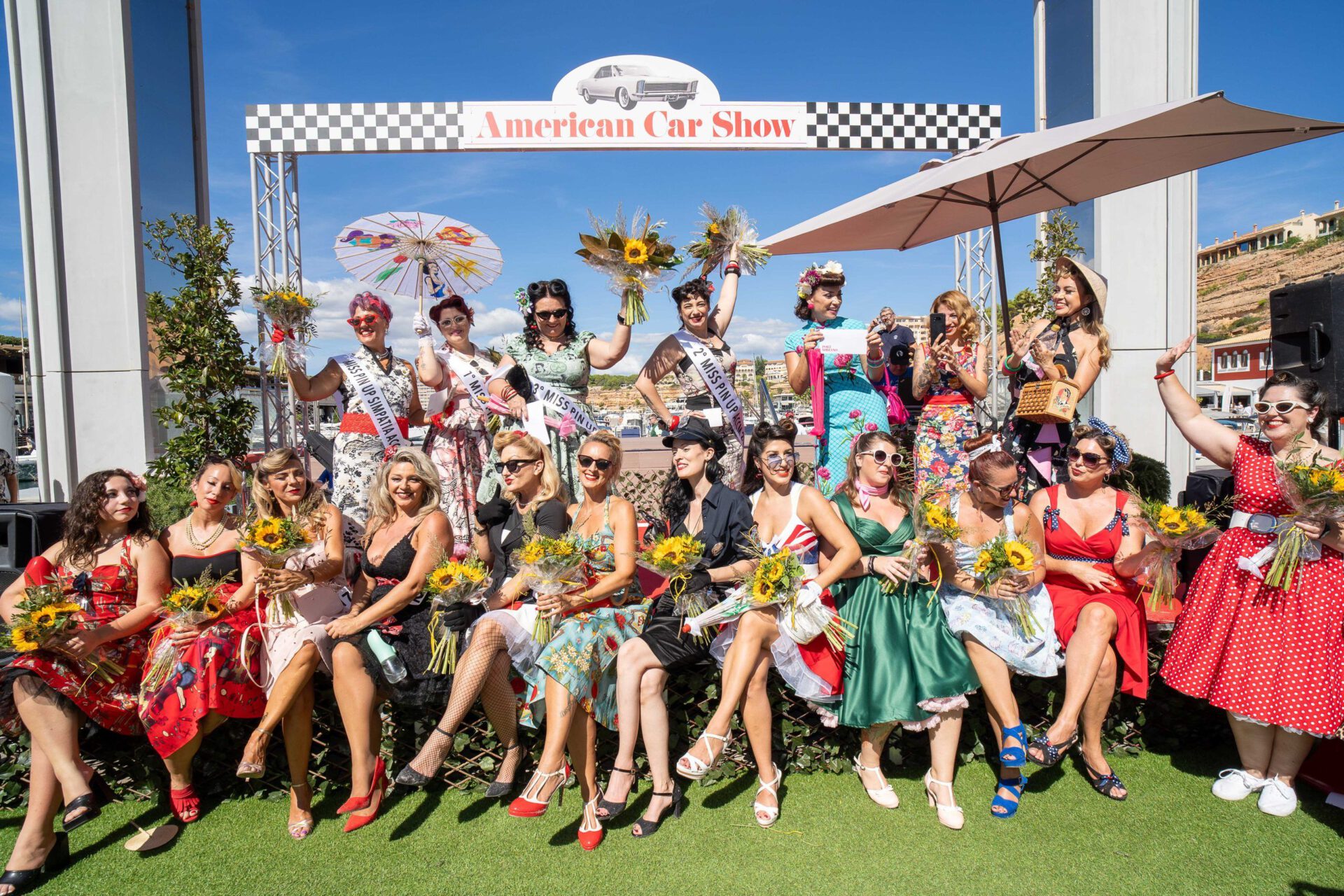
American Car Show
Sunday 13 September, 11 am to 3 pm
 Port Adriano, free entry
Around 80 American cars, rock ’n’ roll, pin-ups and a touch of Las Vegas will provide great entertainment on Sunday 13 September at Port Adriano in Mallorca, when the latest edition of the American Car Show is celebrated with live music, show acts, a Miss Pin-up contest, food trucks and a Las Vegas-style band. Port Adriano auf Mallorca für gute Unterhaltung, wenn die neue Ausgabe der American Car Show gefeiert wird mit Live-Musik, Show Acts, Miss Pin-up-Wettbewerb, Food Trucks und einer Band im Las-Vegas-Stil.
Festa des Vermar in Binissalem
The long-standing grape harvest festival runs until 28 September 2026. As well as exclusive wine tastings at the region’s bodegas, discerning visitors are particularly drawn to the pop-up dining experiences.
SUNKISSED Sunset Partys
If you’d like to round off the late summer in an elegant, jet-set atmosphere, book a table at the exclusive Lobster Club in Puerto Portals. The popular events, such as the session on 13 September 2026 from 5.30 pm, combine house music with views of the Mediterranean.
Mallorca Tattoo Convention
From 25 to 27 September 2026, the Palma Arena (Consorci Velòdrom Illes Balears) will be transformed into a hub for international body art. Over 200 of the world’s most renowned tattoo artists will gather here, and exclusive live sessions can be booked on the spot. Details on tickets and artists are available on Mallorca-Map.
Culture in the museum
For a more tranquil, intellectual evening’s entertainment on 25 September 2026, we recommend the exclusive piano recital by Alain Planès at the Fundació Miró Mallorca, where the acclaimed pianist will offer a fresh interpretation of the works of Erik Satie.
Ibiza – The countdown to the club closures
On the neighbouring island of Ibiza, the peak season for closing parties has begun, with the world’s leading clubs bidding farewell to their summer residencies with spectacular line-ups.
Ushuaïa & Hï Ibiza
The iconic open-air venue Ushuaïa continues to host Martin Garrix’s spectacular weekly shows in September, including on Thursday 10 September 2026. Directly opposite, at Hï Ibiza, HUGEL will be hosting his high-energy ‘Make The Girls Dance’ residency that same evening, featuring the very best in Latin and Afro-house in the Theatre.
Amnesia Closing Highlights
An absolute must-attend event for fans of electronic music is the official RESISTANCE Ibiza Closing Party on Wednesday 16 September 2026, headlined by Eric Prydz and Mind Against. Those who prefer harder trance and house sounds should not miss the long-running Godskitchen event on 26 September 2026 at Amnesia.
Pacha Finals
In September, the legendary Pacha is hosting a series of stylish nights, such as the Double Cherry event (every Wednesday at the Pacha Hotel), culminating on Tuesday 29 September 2026 in the grand TARAKA Closing Party hosted by underground heavyweight GORDO.
If you’d like a bespoke itinerary for your stay, please let us know. Email us at info@deluxemallorca.com .
The big fiestas in Menorca
In September 2026, Menorca reveals its peaceful and traditional side, as the month brings the last major horse festivals and a festive finale to the heart of the island.
Vom 7. bis 9. September 2026 feiert die Inselhauptstadt Mahón zu Ehren ihrer Schutzheiligen. Es gibt feierliche Umzüge, Musik und das berühmte Jaleo, bei dem Reiter ihre Pferde mitten durch die Menge steuern.
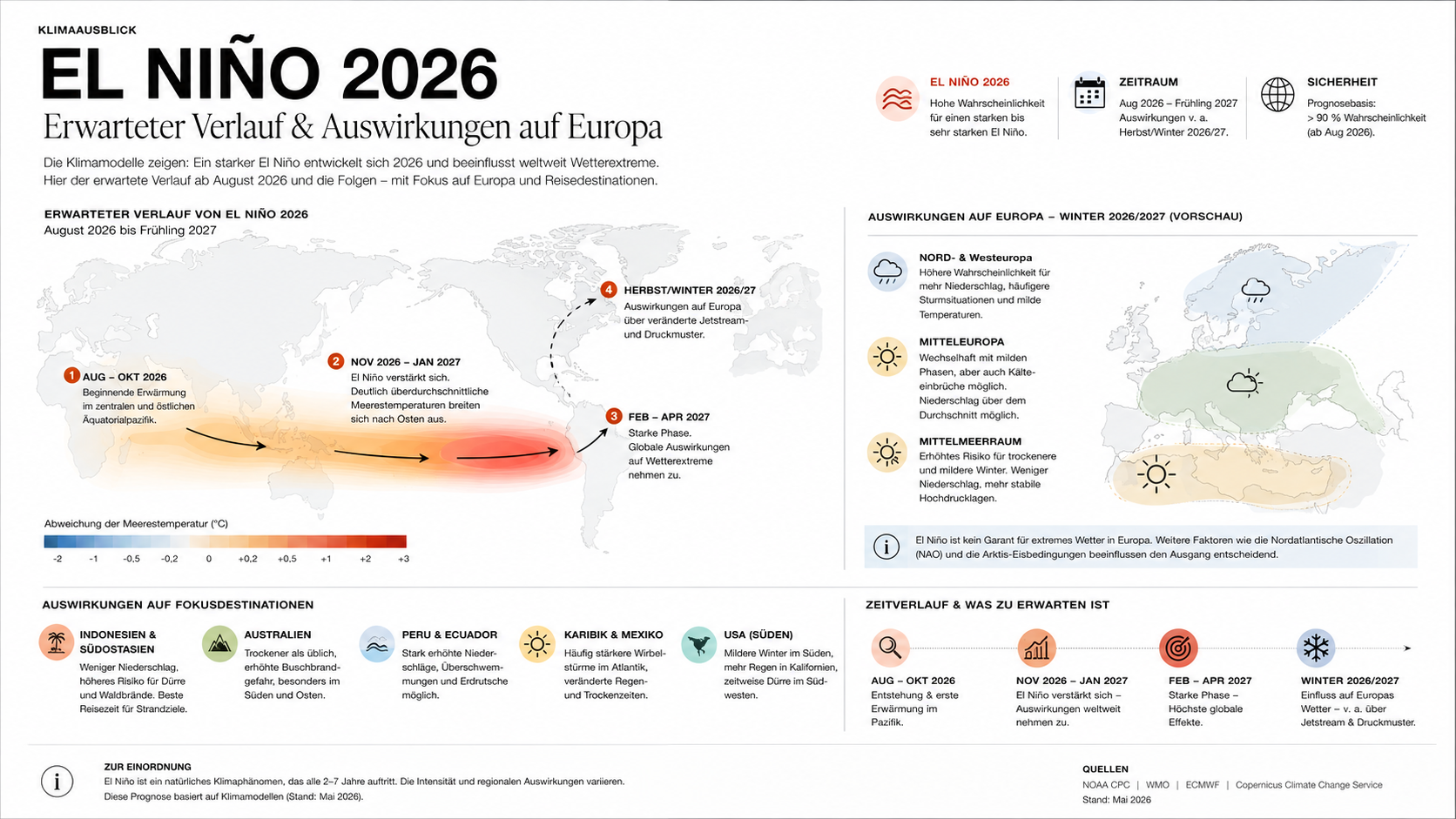
El Niño 2026: What to expect
It begins far away from Europe, where the Pacific Ocean is at its widest. Off the coast of South America, the sea becomes unusually warm, and vast air masses alter their circulation – a weather phenomenon that originated thousands of kilometres away is also affecting travel plans in Europe.
El Niño 2026 is no longer just a model prediction. According to the US National Oceanic and Atmospheric Administration (NOAA), the phenomenon is already well established and is intensifying. The probability of a very strong El Niño occurring in the autumn and winter of 2026/27 stands at around 90 per cent. NOAA even considers a historic course of events to be possible: for October to December, it states there is a 69 per cent probability that the intensity will exceed that of previous events since comparable records began.
However, this does not mean that a specific weather pattern can be predicted for every destination. El Niño shifts the probabilities, not the weather calendar. In Europe in particular, the correlations are significantly weaker than, for example, in the tropical Pacific. The ECMWF points out that El Niño effects in Europe vary from season to season and can sometimes even cancel each other out over the course of a whole winter.
The Pacific sets the pace
The signal is likely to be particularly pronounced in the traditional El Niño regions. Peru and Ecuador are among the countries that are particularly closely linked to the tropical Pacific. Significant changes in rainfall patterns can lead to flooding and landslides in these areas, whilst other regions suffer from drought at the same time.
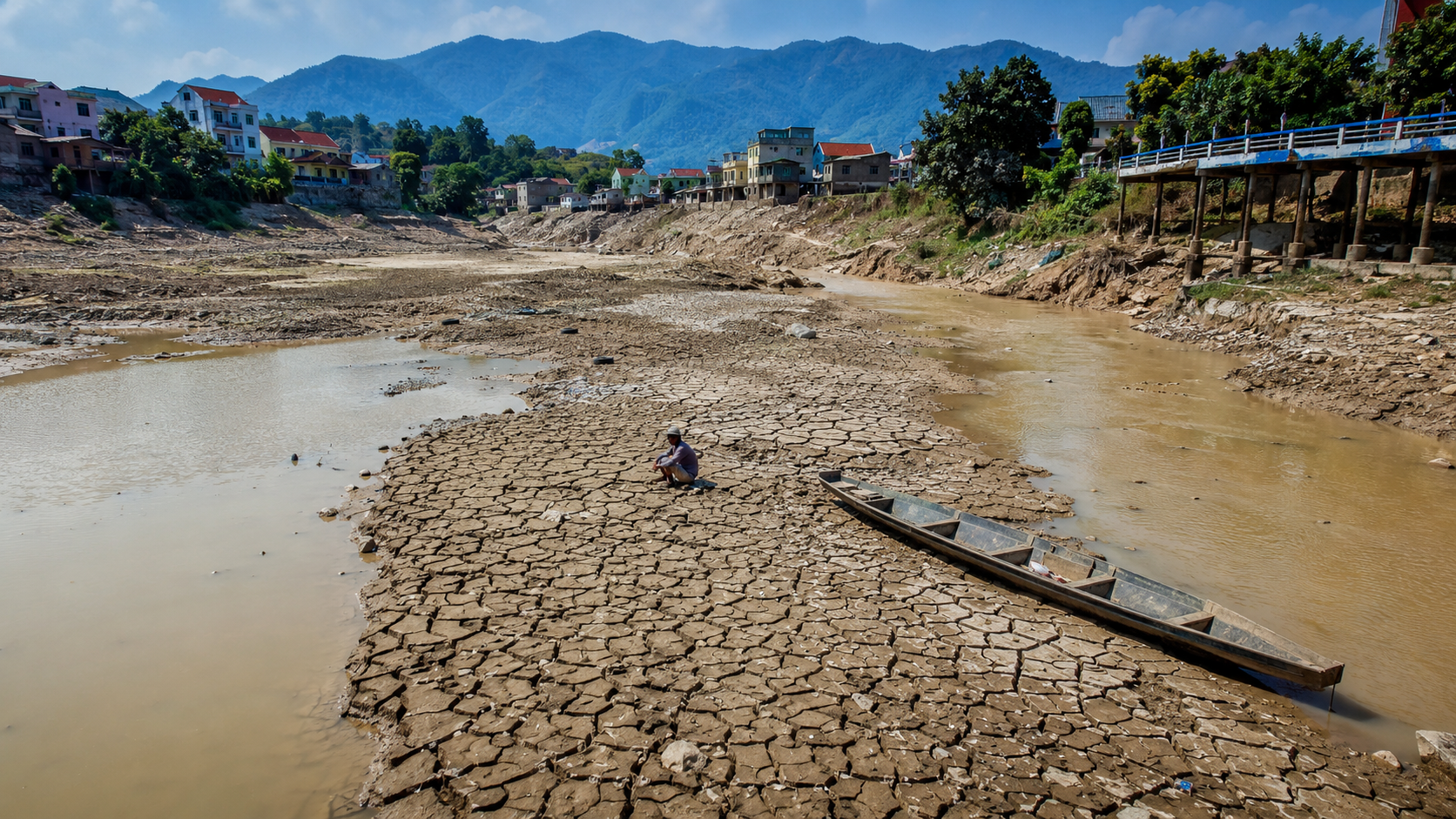
The situation is different in Indonesia and parts of South-East Asia. In those areas, El Niño often brings less rainfall. For travellers, this sounds like perfect beach weather. For the regions affected, however, the drought can have significant consequences – for water supplies, agriculture and the risk of forest fires. The WMO expects a classic El Niño pattern overall for 2026: more rainfall in some regions, and a risk of drought in others.
Australia, too, has traditionally been affected. Drier conditions can increase the risk of fire. In parts of North America, meanwhile, rainfall and temperature patterns are changing; the effects extend from California to the southern United States.
And Mallorca?
For the Balearic Islands, the situation is complicated – and that is precisely what makes it interesting. Mallorca lies well outside the actual El Niño zone. A strong El Niño therefore does not automatically mean a dry or particularly warm winter in Mallorca. The effect is mediated through a chain of atmospheric interactions, in which, amongst other factors, the jet stream and the North Atlantic circulation play a role.
For travellers, this means that El Niño is more of a background factor for Mallorca than a specific weather forecast. In the Mediterranean region, rainfall patterns, temperatures and storm activity may change, but other factors – such as the North Atlantic Oscillation – are often more significant for the weather in Europe.
Europe’s winter under scrutiny
Things are set to get interesting here from autumn onwards. The WMO forecasts above-average temperatures worldwide and significant changes in precipitation patterns. No single scenario can be predicted for Europe as a whole. Atmospheric patterns are likely to shift: Northern Europe may be more heavily affected by precipitation and spells of storms, whilst dry spells may become more likely in the Mediterranean region.
For travellers, this is precisely the most important message: 2026/27 will not be a year when you can simply consult a twelve-month weather map. You should keep an eye on regional forecasts and short-term weather data.
Rissagas in the Balearic Islands – an unusual August 2026
August is one of the months when people in the Balearic Islands pay particular attention to rissagas. A ‘rissaga’ is neither ordinary swell nor a classic tsunami: it is caused by rapid changes in air pressure and atmospheric gravity waves, often associated with thunderstorms. If the disturbance encounters a bay or harbour that is susceptible to it, the movement of the sea level there can intensify significantly.
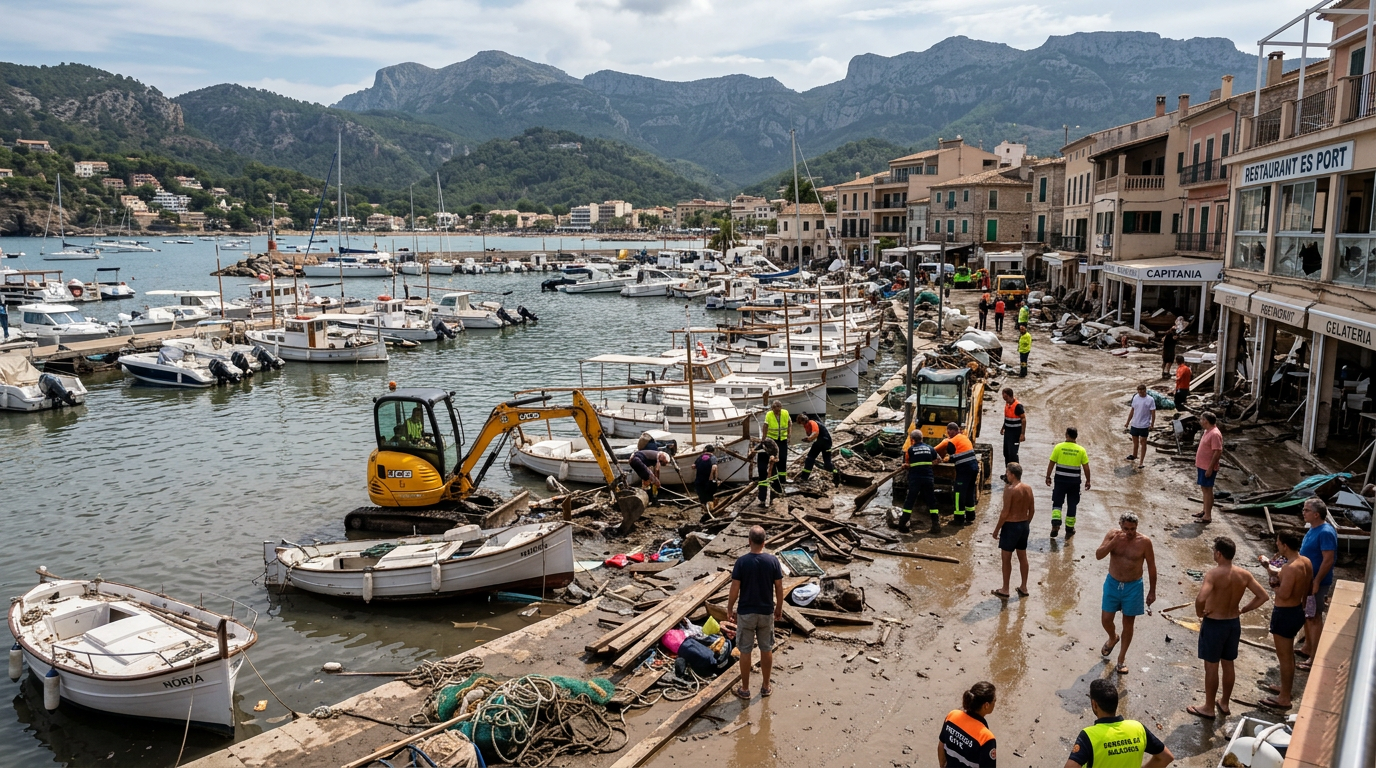
Der August 2026 hat den Balearen eine ungewöhnliche Häufung der "Meteotsunamis" beschert. Besonders deutlich zeigte sich das Phänomen am 24. August 2026: Auf Mallorca wurden Rissagas in Port de Sóller und Port d’Andratx beobachtet. Zeitgleich bestanden auf Menorca Warnungen vor Meeresspiegelschwankungen von bis zu 1,2 Metern.
Ibiza was also affected on the same day. At Platja de s’Arenal and along the seafront promenade in Sant Antoni, the water rose unusually far onto the beaches, promenades and restaurant terraces.
What makes rissagas so distinctive is their apparent unpredictability: the sea can recede several times within a short period and then rise again. This does not necessarily result in high, breaking waves – rather, the water can surge into a harbour or bay like a massive, slowly ebbing and flowing tide.
August 2026 thus clearly demonstrates that it is not only Menorca, with its famous Rissaga hotspot in Ciutadella, that is affected. Mallorca and Ibiza, too, can experience significant fluctuations in water levels under the right atmospheric conditions. Sheltered harbours and bays, where the local geography amplifies the oscillation of the water, are particularly vulnerable.
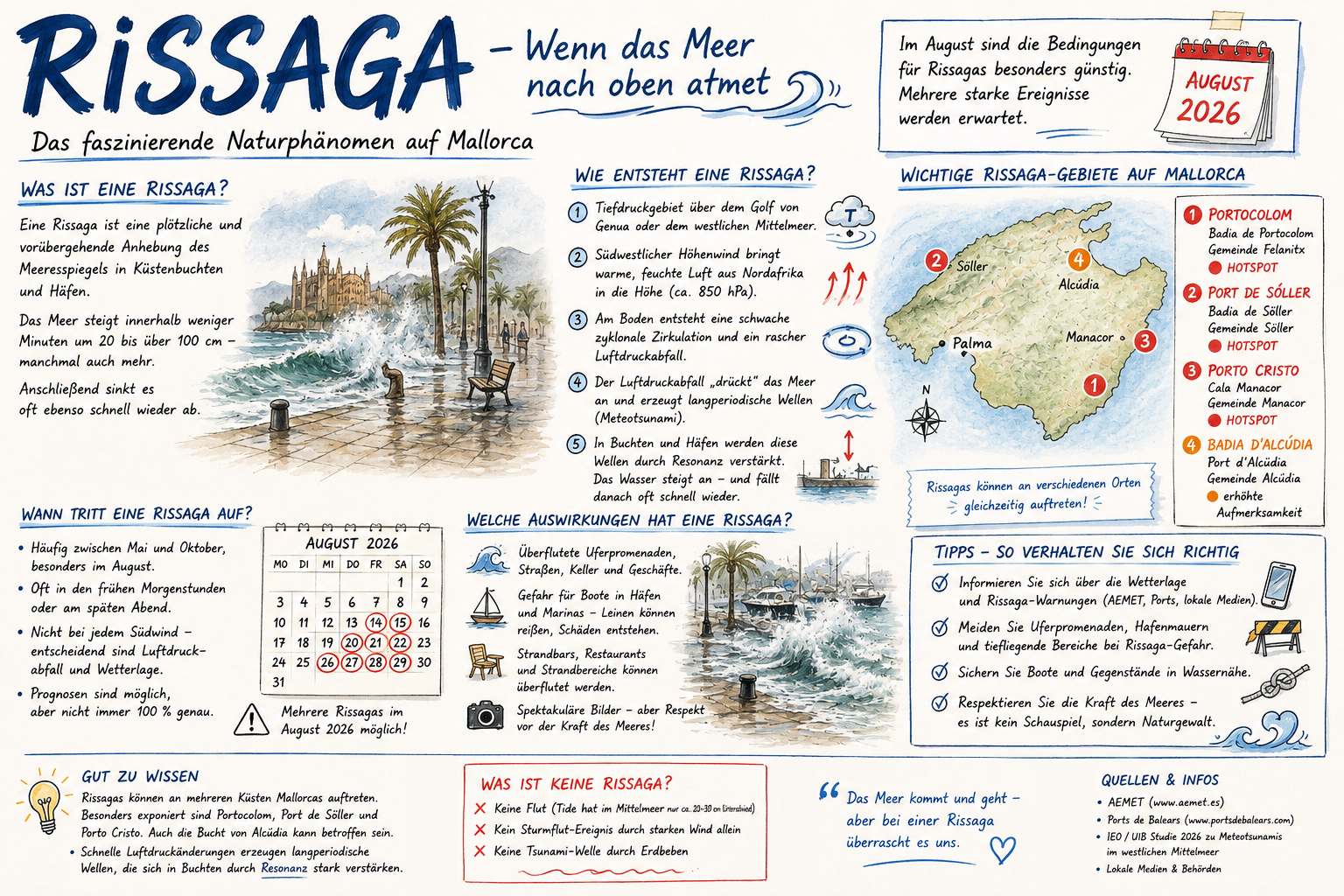
For Mallorca, this August has therefore been a remarkable Rissaga event: the combination of the documented events in Sóller and Andratx and the simultaneous warnings for other Balearic Islands makes it clear that meteotsunamis are an archipelago-wide weather and coastal phenomenon – by no means a problem exclusive to Menorca.
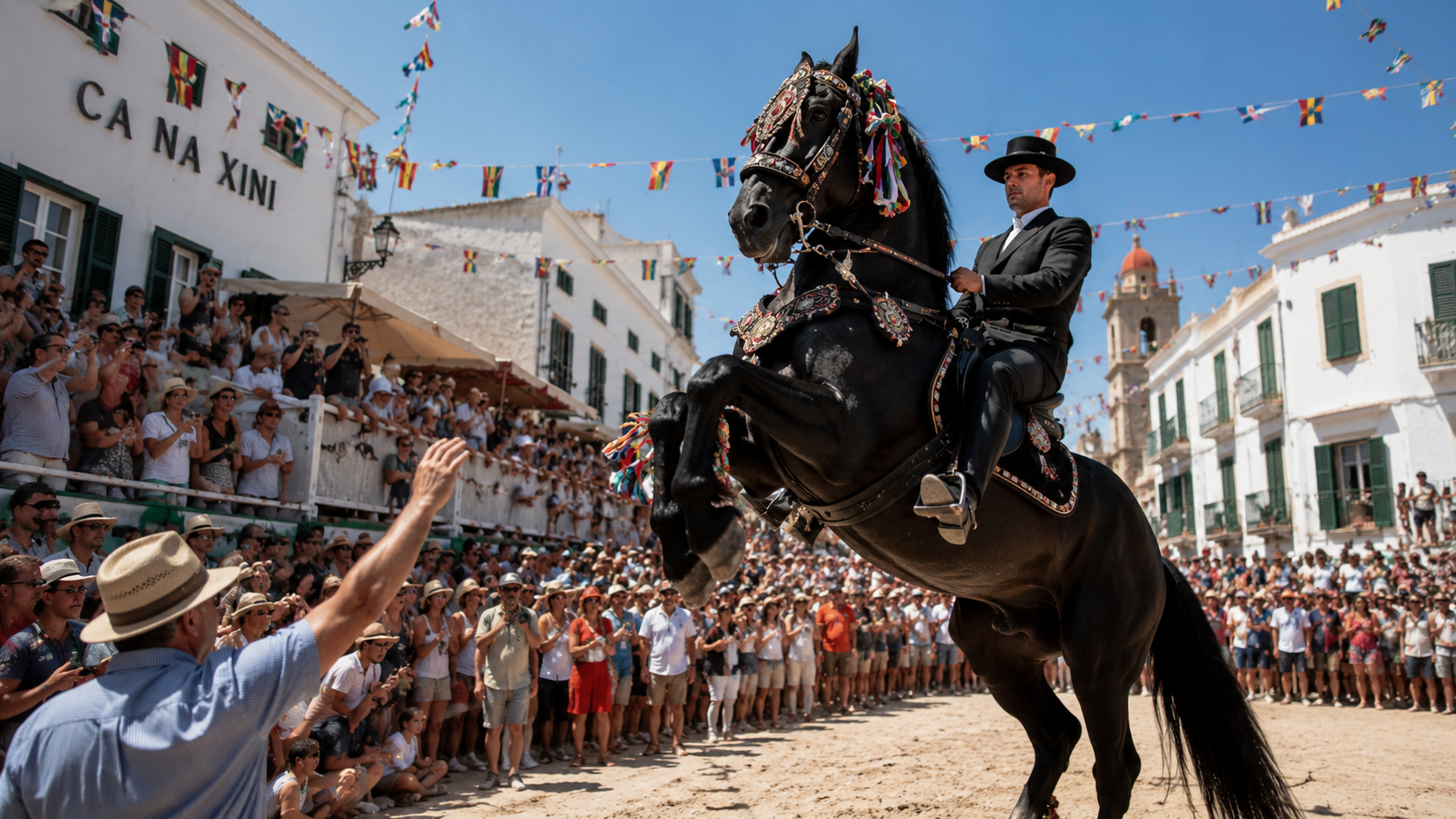
Off to Menorca for the Jaleo in Sant Climent
The second Jaleo in Sant Climent was brought forward to August 2026 due to the intense heat. The festival day began earlier than planned so as not to expose the horses and participants to the high temperatures for too long.
The Jaleo is the traditional and emotional centrepiece of the patron saint festivals on the Balearic island of Menorca.
In this centuries-old ritual, which takes place in various villages during the summer from June to September, festively dressed riders – known as Caixers and Cavallers – ride spirited Menorcan horses straight into a dense crowd gathered in the market square. Driven by the rhythmic sounds of a live brass band, the riders make their horses rear up on their hind legs, in a manoeuvre known as ‘bots’. The audience’s task is to touch the horse’s chest with their hands and keep it standing on two legs for as long as possible. This is seen as a sign of courage, skill and absolute trust between man, animal and community.
The Jaleo de Sant Climent takes place every year on the third weekend in August in the small village of Sant Climent on the Balearic island of Menorca. DeluxeMallorca will take you there: simply send enquiries to info@deluxemallorca.com now.
History and distinctive features of Balearic horsemanship
In the Balearic Islands, particularly on the neighbouring island of Menorca, dressage is a deeply rooted part of the culture and a vibrant part of the island’s identity. The tradition of horse riding dates back to the 14th century, when a coastal defence system was established under King Jaume II. The riders patrolled the famous Camí de Cavalls, the ‘horse path’, which circles the island. From this military tradition, a distinct and proud breed of horse developed: the Cavall Menorquí, the Menorcan horse. These jet-black stallions are characterised by their strength, elegance and an exceptionally courageous and calm nature.
The most distinctive feature is the Doma Menorquina, or Menorcan dressage. It differs from classical dressage in that it involves very specific movements. Traditionally, the reins are held only in the left hand. The showpiece discipline is the ‘Bot’: the horse rears up on its hind legs and strides several metres through the applauding crowd.
🎪 The traditional fiestas
-
Sant Joan in Ciutadella, Menorca: The island’s largest, oldest and most spectacular festival takes place every year on 23 and 24 June. It is of international tourist interest.
-
Sant Martí in Es Mercadal: mid-July, on 20 and 21 July. Slightly smaller than Ciutadella, but lively.
-
A summer of festivals until September: every village in Menorca holds its own horse festival in chronological order. The Fiestas Menorca calendar provides a complete overview.
Anyone wishing to experience these unique fiestas can book a trip to the islands via info@deluxemallorca.com.
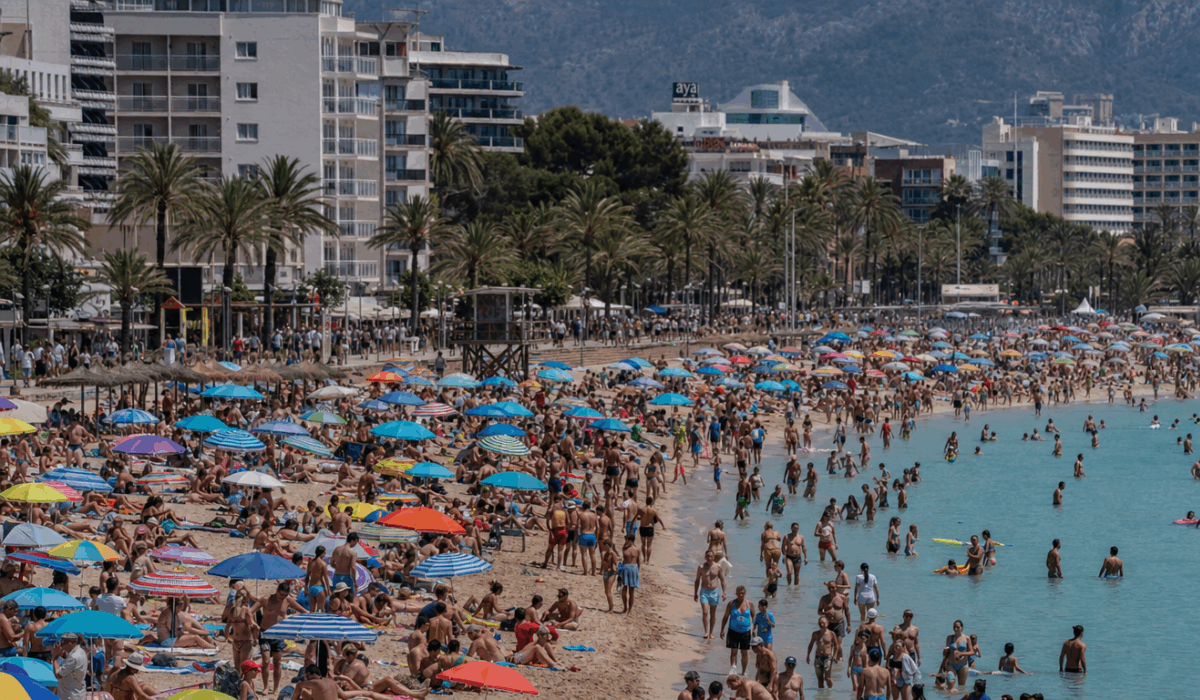
Balearic Islands 2040: An economy beyond mass tourism
Over the past 15 years, the Balearic Islands have generated their income according to a simple principle: growth through volume and premiumisation. Driven by low-cost airlines, new visitor records were constantly being set – most recently, over 14 million guests travelled to the islands each year. The money flowed primarily into the coffers of the catering and hotel sectors. To generate more revenue per capita, investors converted standard hotels into 4- and 5-star oases. At the same time, the property market boomed. Foreign capital bought fincas and flats as speculative investments or holiday accommodation. The result was record revenue for the state from the tourism tax – also known as the ‘Ecotasa’ – and land transfer taxes, whilst at the same time locals were being squeezed out of the housing market.
The paradox of the protests: the target is one’s own state
The current mass demonstrations on the streets of Palma are directed against ‘overtourism’. At their core, they are a powerful signal from the public calling for long-overdue structural change. The residents are demanding a reduction in tourism and, in doing so, are urging politicians to pursue bold, future-proof economic alternatives. The protests are a mandate for the government to place the islands’ prosperity on a broader, crisis-proof footing – as the starting point for a joint effort to transform the Balearic Islands from a purely holiday destination into a modern, diversified living and economic space of the 21st century. Sectors outside tourism, such as IT, research or the green industry, can now be supported through tax incentives or structural measures.
Katalysator US-Direktflüge
The launch of direct flights between the US – specifically from New York to Mallorca – has attracted a new clientele since 2022. Hotels and property prices have adjusted to the influx of affluent guests. From an environmental and social perspective, the summer rush has since proved almost impossible to manage. Mallorca has reached its breaking point. To prevent collapse, the Balearic Islands can learn from destinations that have successfully diversified their appeal.
Option A: The ‘Iceland-Silicon Valley’ model
Mallorca can learn from Malta how a geographically isolated island nation can build new, year-round industries through radical digitalisation and smart legislation. Malta faced a similar challenge: it was heavily dependent on tourism. Today, the country generates a significant proportion of its economic output through digital services, technology and international companies.
Four Malta-inspired strategies for Mallorca
1. Introduce tax incentives for tech companies
2. Building niche ecosystems
3. Focus on ‘digital nomads’
4. Transformation of local service providers
Option B: The ‘Blue Economy & Marine Hub’ model, modelled on Hawaii
Mallorca can learn from Hawaii how a world-famous island destination has transformed its geographical isolation from an economic disadvantage into a global competitive advantage. Hawaii faced the same challenge: a reliance on mass tourism and vulnerability to global crises. The response of this US state in the Pacific was the targeted development of an innovation-driven ‘Blue & Green Economy’.
Hawaiian strategies for Mallorca
1. Using the sea as a laboratory with marine biotechnology and blue tech
2. Radical decarbonisation of the maritime sector through the Eco-Maritime Hub
3. Establish the principle of ‘regenerative tourism’
4. Cleantech self-sufficiency in water and energy
Option C: The ‘Smart Circular Economy Island’ model, as seen in Iceland and Singapore
Mallorca can learn from Iceland and Singapore how an island region can transform existential resource crises into a globally exportable model of success through a consistent circular economy and technological self-sufficiency. Both countries faced massive geographical constraints: Iceland, isolated in the North Atlantic; Singapore, an extremely densely populated city-state with no resources of its own. Both prove that keeping waste, water and energy within a circular system creates the world’s most crisis-resilient economy.
Strategies for Mallorca 1. ‘Waste-to-Wealth’ – waste as a source of raw materials, modelled on Singapore
2. The closed-loop water system – ‘NEWater’, modelled on the Singapore system
3. Cleantech and geothermal symbiosis modelled on Iceland
4. Agro-tech & vertical farming for food self-sufficiency
🎯 Vision for the Balearic Islands 2040
The way forward is to “use the tourism infrastructure to diversify the economy”. Revenue from the remaining – controlled and scaled-back – tourism offerings could be channelled into developing the tech and environmental sectors. Vision 2040 does not view tourism as an adversary, but as a strategic partner in the process of change. The nearby Spanish city of Barcelona has been capping the number of summer visitors since 2026; it seems there is no way around this measure for the Balearic Islands either.
The latest European studies highlight where Europe’s economy is facing bottlenecks. Reports from the European Commission (EU Shortage Occupations Report) and the Eurofound research foundation show that over 80 per cent of European companies are suffering from a shortage of skilled workers in strategic sectors of the future. Thanks to their pleasant climate and excellent infrastructure, the Balearic Islands hold enormous appeal for European talent. The islands are well-suited as a location for addressing European challenges in three growth sectors.
1. ICT, AI and cyber security: The digital bottleneck
2. Green Tech & Net-Zero Engineers: Towards the Energy Transition
3. Marine biotechnology: the blue economy
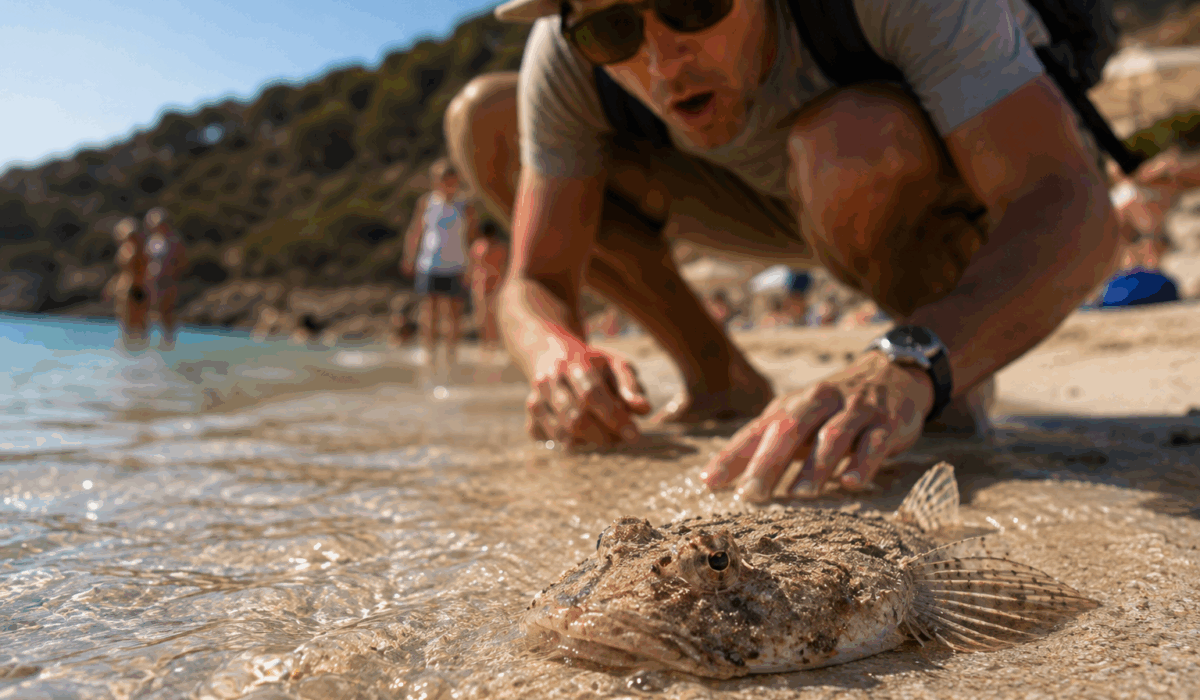
Dangerous encounters: What globetrotters should know
It’s a phenomenon we see time and again amongst modern nomads: globetrotters who spontaneously book the next first-class flight halfway around the world without first taking a moment to familiarise themselves with the flora and fauna of their destination. They pack the latest resort wear collection, but forget that, climatically – and biologically – the jungles of Indonesia are not exactly next door to the Lüneburg Heath. An understanding of the destination and an awareness of the potential dangers lurking beyond the infinity pool are part of the unwritten code of stylish travel. Only those who know how to react to an unexpected encounter can move with confidence on the global stage.
- Die Seewespe in den Gewässern Nordaustraliens: In den flachen, türkisblauen Küsten des Outbacks schwebt das giftigste Wesen der Erde. Ihre Tentakel fordern absolute Ehrfurcht – ein einziger Kontakt mit diesem transparenten Phantom kann in Minuten fatal enden.
- Der Inlandtaipan im Herzen Australiens: Die giftigste Landschlange der Welt meidet das Rampenlicht und lebt verborgen in den rissigen Lehmböden der australischen Wüste. Ein einsamer Überlebenskünstler mit einer Toxizität, die jede Vorstellungskraft sprengt.
- Der Schreckliche Pfeilgiftfrosch an Kolumbiens Pazifikküste: Im dichten, smaragdgrünen Regenwald Kolumbiens leuchtet dieser winzige Frosch wie ein Juwel. Doch seine Haut trägt das tödlichste Gift der Wirbeltierwelt – eine reine Berührung genügt.
- Der Blaugeringelte Krake im Indopazifik: Von den Philippinen bis nach Bali verbirgt sich in malerischen Gezeitentümpeln ein psychedelisch anmutendes Wunderwerk. Wenn seine blauen Ringe pulsieren, ist das keine Einladung, sondern die letzte Warnung vor einem hochpotenten Nervengift.
- Die Landkarten-Kegelschnecke im Indischen Ozean: Wer an den weißen Stränden tropischer Riffe nach Souvenirs sucht, übersieht leicht diese architektonisch perfekte Schnecke. Ihre unsichtbare Harpune macht sie zur elegantesten Gefahr des Ozeans.
Das Toxizitäts-Ranking der Balearen reicht von Spinnenbissen bis zu brennenden Nesseln im azurblauen Wasser. Die Tierwelt des Archipels ist keineswegs mit den tödlichen Extremen Australiens vergleichbar, dennoch verlangt unsere kuratierte Liste der zehn giftigsten Arten respektvolle Distanz. Erste-Hilfe-Maßnahmen liefern wir mit, damit du im Ernstfall sofort souverän handeln kannst.
- Toxizität: Sehr hoch (nekrotisch).
- Lebensraum: Felsspalten, Höhlen, Keller und verlassene Fincas.
- Erste Hilfe: Ruhigstellen und die Bissstelle sofort kühlen, um die Ausbreitung des Gewebe zerstörenden Gifts zu verlangsamen. Desinfiziere die Wunde gründlich und suche umgehend einen Arzt auf; eine frühzeitige Behandlung verhindert schwere Gewebeschäden.
- Toxizität: Hoch (systemisch).
- Lebensraum: Offenes Meer, nach Stürmen im Frühjahr an den Stränden von Mallorca und Ibiza.
- Erste Hilfe: Niemals mit Süßwasser oder Alkohol abspülen, da dies ungeplatzte Nesselkapseln aktiviert. Spüle die Haut ausschließlich mit Meerwasser ab und schabe Tentakelreste vorsichtig mit einer Kreditkarte oder mit Stingblade (sollten Wassersportler immer dabei haben) ab. Suchen bei Kreislaufproblemen sofort den Notruf (112).
- Toxizität: Hoch (neurotoxisch).
- Lebensraum: Trockenes, niedriges Gestrüpp des Hinterlands und unter Steinen.
- Erste Hilfe: Bewahre Ruhe, um deinen Herzschlag flach zu halten, und lagere das betroffene Körperteil ruhig. Reinige die Bisswunde mit Antiseptikum und suche das nächste Krankenhaus oder einen Inselarzt auf, um die Schmerzsymptome medizinisch kontrollieren zu lassen.
- Toxizität: Mittel bis hoch (lokal intensiv).
- Lebensraum: Eingegraben im seichten, sandigen Wasser direkt an Badeständen.
- Erste Hilfe: Das Gift ist hitzeempfindlich (thermolabil). Tauche den Fuß für mindestens 30 bis 60 Minuten in so heißes Wasser, wie es gerade noch erträglich ist (ca. 45 °C), um die Proteine des Gifts zu zerstören. Entferne eventuelle Stachelreste vorsichtig mit einer Pinzette.
- Toxizität: Mittel (schwach giftig).
- Lebensraum: Trockene Buschlandschaften, Olivenhaine und sonnige Wegränder.
- Erste Hilfe: Da die Giftzähne tief im Rachen liegen, kommt es selten zu einer echten Vergiftung. Wasche die Bisswunde mit Seife und desinfiziere sie gut, um Sekundärinfektionen zu vermeiden. Eine kühlende Creme lindert die Schwellung.
- Toxizität: Mittel (schwach giftig).
- Lebensraum: Unter Steinen oder im alten Mauerwerk historischer Fincas.
- Erste Hilfe: Behandle den Biss wie einen Bienenstich. Desinfiziere die betroffene Stelle, kühle sie mit einem Eispack und trage bei Bedarf ein leichtes antihistaminisches Gel auf, um den Juckreiz zu stillen.
- Toxizität: Mittel (allergen).
- Lebensraum: Im Spätwinter und Frühjahr auf dem Waldboden unter Pinien.
- Erste Hilfe: Berühre Raupen und Nestsituationen niemals. Bei Kontakt Kleidung sofort wechseln und bei 60 °C waschen. Dusche heiß und wasche deine Haare aus. Nicht kratzen, da das die Gifthaare tiefer in die Haut treibt; nutze besser Kortisonsalben.
- Toxizität: Mittel (lokal brennend).
- Lebensraum: Offenes Meer, im Hochsommer bei auflandigem Wind in Badebuchten.
- Erste Hilfe: Spüle die Haut mit Meerwasser (kein Süßwasser!). Trage trockenen Sand oder Rasierschaum auf die betroffene Stelle auf und schabe die Reste nach dem Trocknen mit Stingblade oder einer Kreditkarte vorsichtig ab. Ein antihistaminisches Gel nimmt den brennenden Schmerz.
- Toxizität: Gering.
- Lebensraum: Unter trockenem Holz, Steinen oder in Ritzen von Natursteinmauern.
- Erste Hilfe: Reinige die Einstichstelle und kühle sie sofort mit Eis, um die Schwellung zu minimieren. Ein elektronischer Stichheiler (Wärmestift) kann helfen, die Schmerzweiterleitung zu blockieren. Beobachte deinen Körper auf seltene allergische Reaktionen.
- Toxizität: Gering (Gefahr nur bei Allergien).
- Lebensraum: Nester hoch oben in Baumkronen oder an Gebäuden.
- Erste Hilfe: Entferne dich ruhig aus dem Radius des Nestes. Kühle den Stich großflächig. Solltest du unter einer bekannten Insektengiftallergie leiden oder Symptome wie Atemnot und Schwindel verspüren, rufe den Notarzt.
"Wir empfehlen heute Stingblade als Must-have für den Balearen-Urlaub."
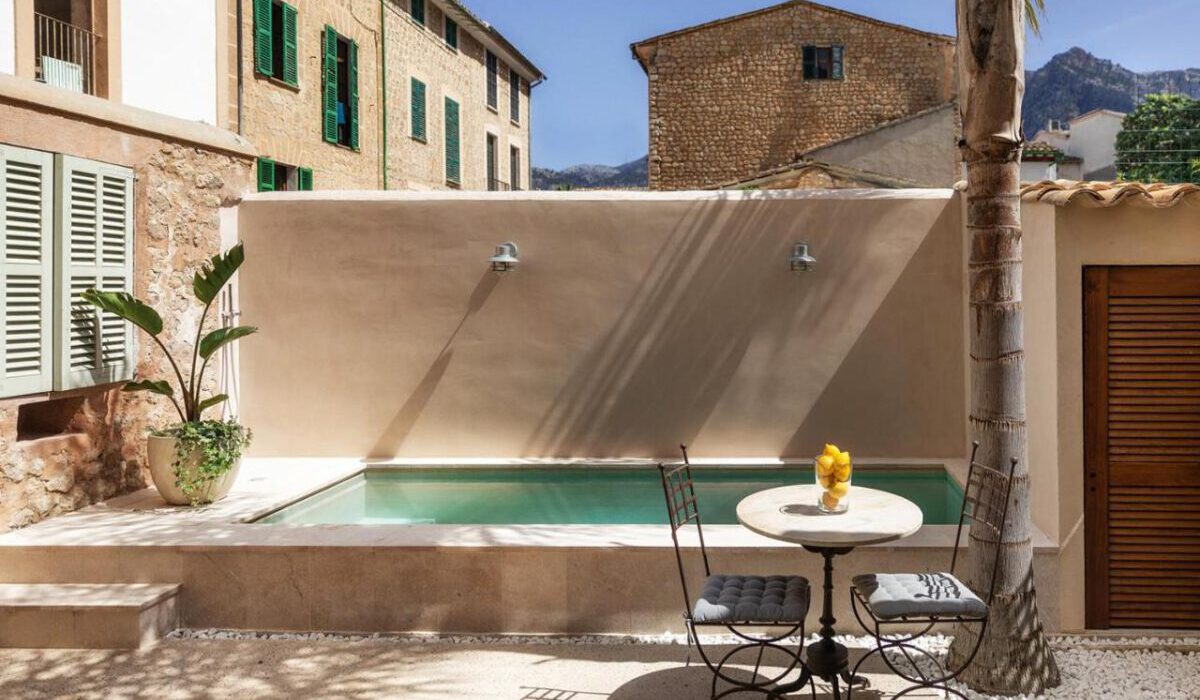
Post-Luxury: How the Balearic Islands are planning the next chapter in travel
Auf den Balearen besitzen namhafte Hotels eine offizielle BREEAM-Zertifizierung, die strenge Standards für umweltfreundliches und nachhaltiges Bauen und Betreiben bestätigt.
- Six Senses Ibiza, Portinatx: Dieses Luxusresort war das erste BREEAM-zertifizierte Hotel auf den gesamten Balearen. Es zeichnet sich durch eigene erneuerbare Energiequellen, eine eigene Bio-Farm und ein starkes Zero-Waste-Konzept aus.
- Hotel Bless Ibiza, Cala Nova: Dieses Hotel durchlief den Prozess zur Erlangung des Zertifikats BREEAM In-Use, um seine betriebliche Nachhaltigkeit fortlaufend zu optimieren.
☀️ Mallorca
- Ikos Porto Petro, Porto Petro: Das weitläufige Resort ist das erste Hotel in der Kategorie "Neubau" auf Mallorca, das nach einer umfassenden Sanierung das Prädikat „Very Good“ erhalten hat.
- Zoëtry Mallorca, Llucmajor: Das exklusive Boutique-Hotel in einem historischen Herrenhaus aus dem 14. Jahrhundert hält ebenfalls die BREEAM-Zertifizierung mit der Bewertung „Sehr gut“. Es kombiniert Denkmalschutz mit modernen Nachhaltigkeitskriterien.
- AluaSoul Mallorca Resort & AluaSoul Palma: Diese Hotelanlagen sind in der offiziellen BREEAM-Projektdatenbank mit der Zertifizierung BREEAM In-Use gelistet (Bewertung: Excellent).
Finca Serena Mallorca, Montuïri
- Nachhaltigkeits-Fokus: Durch Biosphere Sustainable zertifiziert. Das 45 Hektar große Anwesen nutzt Solaranlagen als primäre Energiequelle zur Warmwasseraufbereitung und besitzt eine eigene Wasseraufbereitungsanlage.
- Eco-Erlebnis: Farm-to-Table-Ansatz im Restaurant Jacaranda. Ein Großteil des Gemüses, der Kräuter, des Olivenöls und sogar der Hauswein stammen direkt aus den hoteleigenen biologischen Gärten, Obsthainen und Weinbergen.
Es Racó d’Artà, Artà
- Nachhaltigkeits-Fokus: Das Hotel gilt als eines der extremsten Öko-Luxus-Projekte der Insel. Das historische Landgut wurde nach baubiologischen Kriterien renoviert (Lehmputz, lokale Hölzer) und wirtschaftet zu 100 % regenerativ.
- Eco-Erlebnis: Neben einer autarken Solaranlage liegt der Fokus auf Permakultur, Mehl aus eigenem ökologischem Getreideanbau und Meditations-Retreats im Einklang mit der Natur.
Castell Son Claret, Es Capdellà
- Nachhaltigkeits-Fokus: Ausgestattet mit intelligenten Strom-/Wassermessern, einem hochmodernen Energiemonitoring und Wärmepumpen zur CO₂-Reduktion. Zudem spendet das Hotel für jede Online-Buchung 5 € direkt an die Marilles Foundation zum Schutz des marinen Ökosystems der Balearen.
- Eco-Erlebnis: Das Hotel kooperiert mit der lokalen Organisation ESMENT. Jugendliche mit Behinderungen werden im Hotelbetrieb ausgebildet und bewirtschaften den Bio-Garten, der das mit einem Michelin-Stern ausgezeichnete Restaurant Sa Clastra beliefert. Einzigartig: Das Poolwasser stammt aus dem historischen Brunnen und benötigt keine chemische Chlorierung.
Four Seasons Resort Mallorca at Formentor, Pollença
- Nachhaltigkeits-Fokus: Das frisch renovierte, ikonische Luxusresort inmitten eines 1.200 Hektar großen Naturschutzgebietes hat die renommierte LEED-Gold-Zertifizierung für umweltfreundliches und nachhaltiges Bauen erhalten.
- Eco-Erlebnis: Neben hochmoderner Energieeffizienz bietet das Hotel seinen Gästen ein "Eco-Beauty-Spa-Konzept" sowie geführte Forest-Bathing-Exkursionen – Waldbaden – zum bewussten Erleben der geschützten Halbinsel.
Iberostar Selection Playa de Muro Village, Playa de Muro
- Nachhaltigkeits-Fokus: Zertifiziert durch EarthCheck. Als Teil der globalen Wave of Change-Bewegung von Iberostar nutzt das Hotel 100 % erneuerbaren Strom und ist komplett frei von Einwegplastik.
- Eco-Erlebnis: Die Zimmer verfügen über hauseigene Trinkwasser-Aufbereitungsanlagen mit Spendern auf den Fluren. Saisonal bietet das Hotel exklusive Touren auf einer traditionellen Llaüt (mallorquinisches Fischerboot) an, die komplett auf Elektromotor umgerüstet wurde und lautlos ohne CO₂-Fußabdruck gleitet.
Grupotel Parc Natural & Spa, Playa de Muro
- Nachhaltigkeits-Fokus: Gelegen direkt an der Grenze zum geschützten Naturpark S’Albufera. Das Hotel arbeitet mit strengen Umweltmanagementsystemen, um den sensiblen Übergang von Dünenlandschaft zu Hotelgarten zu schützen.
- Eco-Erlebnis: Am täglichen Premium-Buffet gibt es eine „Bio-Corner“, die zertifizierte, pestizidfreie Produkte von Landwirten aus der Umgebung anbietet.
- Das Besondere: Es handelt sich um ein rein vegan-vegetarisches Bio-Micro-Hotel, das eine strikte Zero-Waste-Philosophie verfolgt.
- Zukunftstechnologie: Das gesamte Interieur und Design basiert auf Upcycling und recycelten lokalen Materialien. Energieflüsse und Abfallströme sind komplett kreislauforientiert gestaltet (zertifiziert nach strengen Kreislaufwirtschaftsplänen).
2. Das PICIB-Projekt & KI-gestützte Tourismussteuerung auf den Balearen-Inseln
- Das Besondere: Tourismusbetriebe auf Mallorca, Menorca, Ibiza und Formentera werden digitalisiert und mittels Künstlicher Intelligenz (KI) gesteuert.
- Zukunftstechnologie: Hotels nutzen vorausschauende KI-Algorithmen, um den exakten Verbrauch von Ressourcen wie Wasser, Strom, Lebensmittelabfälle zu berechnen und Lieferketten in Echtzeit komplett CO₂-neutral zu optimieren.
- Das Besondere: Über eine staatlich finanzierte App wird ein digitaler Unterwasser-Atlas für Yachturlauber und Skipper bereitgestellt.
- Zukunftstechnologie: Die App nutzt GPS- und Satellitendaten, um exakte, zulässige Ankerplätze anzuzeigen. Sie verhindert so, dass die empfindlichen maritimen Ökosysteme durch Ankerketten zerstört werden.
- Das Besondere: Es verbindet traditionelle balearische Landwirtschaft (Agrikultur) mit modernster Solarenergie (Photovoltaik) auf touristisch genutzten Fincas und Landhotels.
- Zukunftstechnologie: Anstatt Landschaften mit Solarparks zu bestücken, schützen transparente Solarpaneele landwirtschaftliche Kulturen wie Wein oder Oliven vor der Sommerhitze und erzeugen gleichzeitig grünen Strom, um die angeschlossenen Hotels und E-Ladestationen autark zu betreiben.
Das nächste Kapitel
„Wir glauben nicht an den Status quo des Reisens. Seit zwei Jahrzehnten dokumentiert das Team von DeluxeMallorca die Evolution der Balearen. Heute nutzen wir die intelligente Technologie unserer Zeit, um unser Wissen in nachhaltige Urlaubserinnerungen zu übersetzen – für unsere Leser und die Kunden unserer Reiseagentur.“