
How crocheted corals are being turned into a global work of art
Austrian conceptual artist Dr Petra Maitz and Kandima Maldives are launching an international open call. Their aim is to create the world’s largest participatory crocheted coral reef by 2028 – as an artistic statement in support of biodiversity and the protection of the oceans.
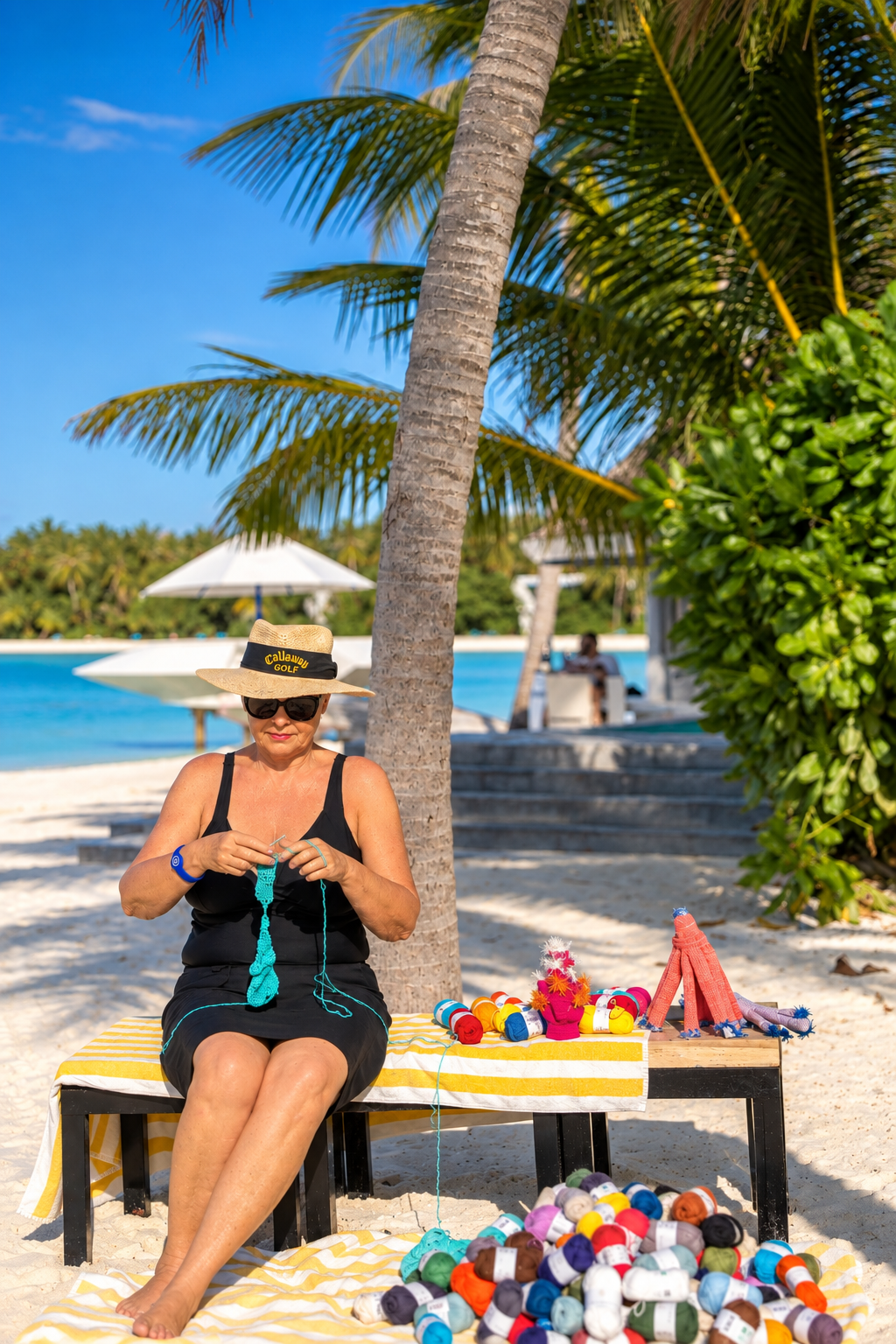
“When art begins to function like an ecosystem, the result is more than just an installation. It becomes a living organism.” It is with this thought in mind that the Austrian conceptual artist Dr Petra Maitz describes her latest international art project. Together with the Kandima Maldives lifestyle resort, she has launched ‘The Living Crochet Reef @Kandima’. By 2028, the world’s largest crocheted coral reef is set to be created in the Maldives – supported by thousands of people from all over the world.
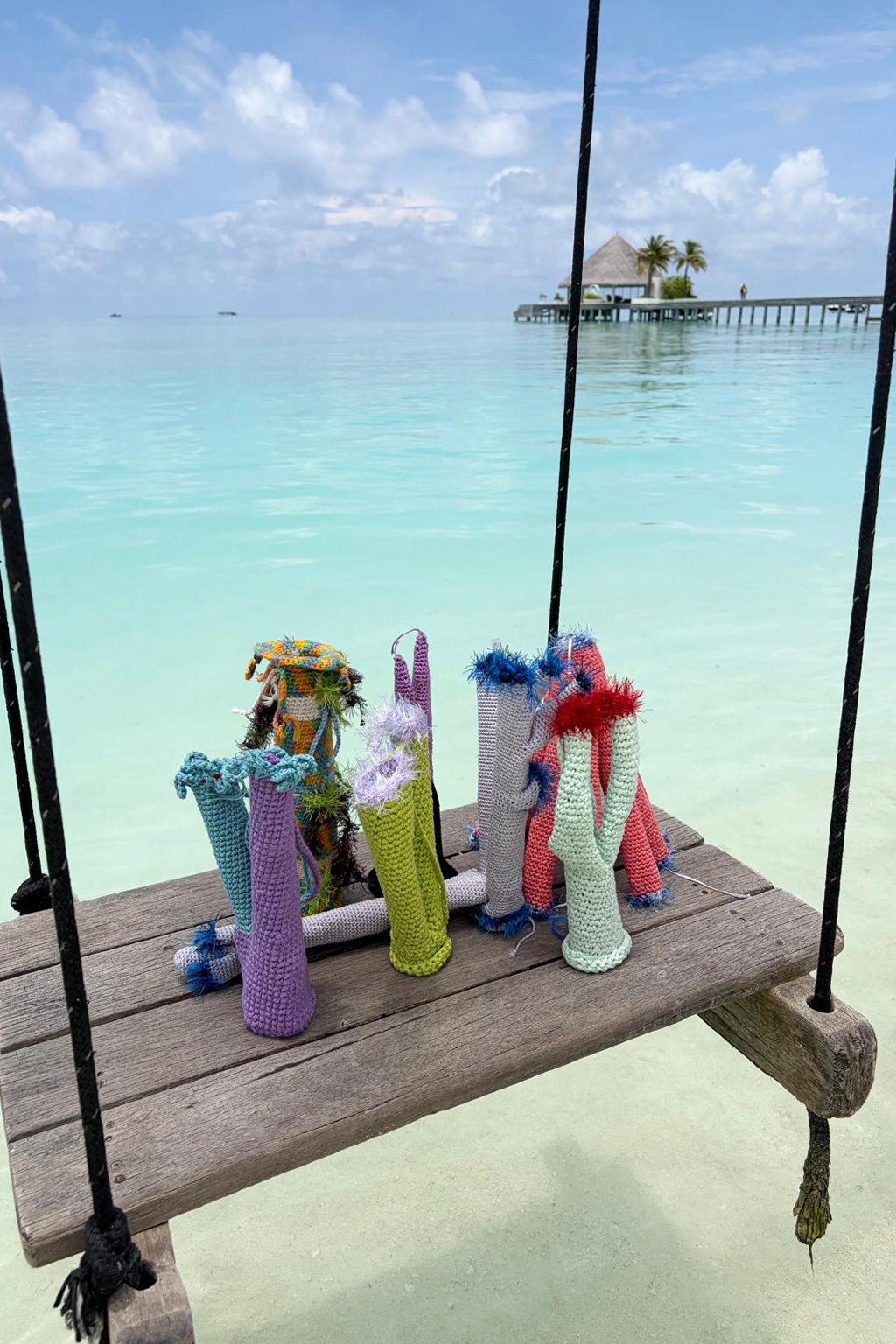
The project kicks off with the international open call ‘Crochet the Reef’. People of all ages are invited to contribute crocheted corals and sea creatures. Each piece will form part of an ever-growing installation, which is also intended to symbolise collaboration and the protection of marine ecosystems.
Art as a model of nature
The conceptual basis of the project is a biological principle: coral reefs are among the most species-rich ecosystems on Earth. Their complex structures arise from the interaction of countless organisms. No single organism can create the reef on its own – it is only through this interaction that it becomes possible.
It is precisely this idea that Petra Maitz applies to her art. A collective work emerges from many individual contributions, the true authorship of which lies with the community. She does not view crocheting as a craft, but as an artistic method for making collective processes visible.
In her installations, Maitz combines aesthetics with evolutionary biology, marine research and epistemology. The focus is not solely on the finished object, but on the collaborative creative process. In light of the global threat to coral reefs, she employs an unusual form of environmental communication: rather than using images intended to serve as a warning, she aims to foster an emotional awareness of biodiversity and ecological responsibility through the viewer’s own participation.
Between Humboldt and Beuys
For decades, Maitz has been working at the intersection of art and science. Inspired by Joseph Beuys’s expanded concept of art and Alexander von Humboldt’s holistic understanding of nature, she regards art as a laboratory for new models of thought. Concepts such as evolution, interdependence and self-organisation are not merely explained, but can be experienced through collaborative artistic practice.
The roots of her approach date back to 2001. It was then that she founded the Lady Musgrave Reef Foundation in Vienna and launched one of the first international participatory coral art projects. The work, which has evolved over decades, comprises around 1,400 individual pieces and has been exhibited in renowned museums and art institutions in cities including Budapest, Bilbao, Barcelona, Hamburg, Mumbai, Sydney and Beijing. Today, the coral reef is housed at the Ludwig Museum in Budapest.
The Vienna-born artist initially studied medicine, then fine art at the University of Fine Arts in Hamburg, and later obtained a PhD in knowledge transfer at the University of Applied Arts in Vienna. This interdisciplinary approach continues to shape her work to this day.
Kandima Maldives as an international arts platform
With “The Living Crochet Reef @Kandima”, the resort is continuing its KULA Art Initiative in earnest. The exhibition “DHIRUN: Art for Biodiversity” had already brought together local artists to explore the theme of biodiversity and was organised in collaboration with the United Nations Development Programme (UNDP).
The new project adds a global dimension to this approach. Guests, artists, schools and crochet communities from all over the world are invited to take part. Kandima Maldives views art not as decoration, but as a platform for cultural exchange and social engagement.
By 2028, the aim is to create an installation that goes far beyond the traditional resort setting: an artificial coral reef that draws on the principles underlying the formation of its natural counterpart and connects people across the globe.
International Open Call: ‘Crochet the Reef’
Under the slogan ‘Crochet the Reef’, Dr Petra Maitz and Kandima Maldives are calling for submissions of crocheted corals and sea creatures, interpreted in any style. Every entry will form part of the collective artwork.
Information and crochet patterns:
office@petramaitz.com
Please send entries to:
Kandima Maldives
„The Living Crochet Reef“
Kandima Island, Dhaalu Atoll
Kudahuvadhoo 20066
Maldives
For submissions from the DACH region:
ziererCOMMUNICATIONS
„The Living Crochet Reef“
Effnerstraße 44–46
DE – 81925 Munich